


A cake that leaves the kitchen perfect can arrive with a dented side, a leaning tier or a soft, slipping border. The damage almost never comes from the cake itself. It comes from three forces during the trip: sliding when the car brakes, pressure from the weight above, and heat softening the frosting.
To transport a cake safely, chill it until the frosting is firm, set it on a board that fills the box floor, close it in a rigid box, and place the box flat on the car floor or a level trunk on a non slip mat, never on a seat or a lap. Cool the car before loading, brake early and take turns slowly. Tiered cakes also need dowels in every tier and a center dowel, or should travel as separate tiers and be stacked on site.
Each of those steps stops one of the three forces. Chilling and air conditioning stop heat. The board, mat and floor placement stop sliding. Dowels and a rigid box stop pressure.
How Frosting Type Changes the Plan
The frosting decides how cold the cake must stay and how long it can travel.
| Finish | Behavior in transit | What to do |
|---|---|---|
| American buttercream | Forms a light crust; softens in a warm car | Chill until firm; keep the car cool |
| Swiss or Italian meringue buttercream | Smooth and soft at room temperature | Chill well before leaving; short, cool trips |
| Cream cheese frosting | Soft and perishable | Keep refrigerated until loading; use a cooler for longer trips |
| Whipped cream | The least stable finish | Refrigerated transport only; deliver last and fast |
| Ganache | Sets firm and holds shape | One of the most stable finishes for delivery |
| Fondant | Protects the cake, but can sweat when cold cake meets humid air | Let it adjust inside the closed box; do not wipe condensation |
A firm, cold cake resists dents. A soft cake takes the shape of anything it touches, including the box wall.
How Do You Keep a Cake From Sliding in the Car?
Sliding has two sources, and both must be stopped.
Inside the box:
- Use a board the same size as the box floor, so there is no gap to slide into. See the cake box sizes chart for matching board and box.
- Pipe a dab of frosting on the board before placing the cake. It works as glue.
- For heavy cakes, a drum instead of a thin board keeps the base flat when the box is lifted.
Inside the car:
- Place the box on the floor of the passenger side or on a flat trunk. Car seats slope back, so a cake on a seat leans for the whole drive.
- Put a non slip mat, such as rubber shelf liner, under the box.
- Fill the space around the box with towels or a second box so it cannot move sideways.
- Never hold a cake on your lap. Your knees are not level and your body moves with every turn.
While driving:
- Brake early and gently. Most damage happens on stops, not at speed.
- Take turns and speed bumps slowly.
- Plan a route with fewer stops and rough roads.
A box that bends when lifted lets the board flex and the cake crack before it even reaches the car. Custom cake boxes built to the board size, with a rigid base, remove that risk.
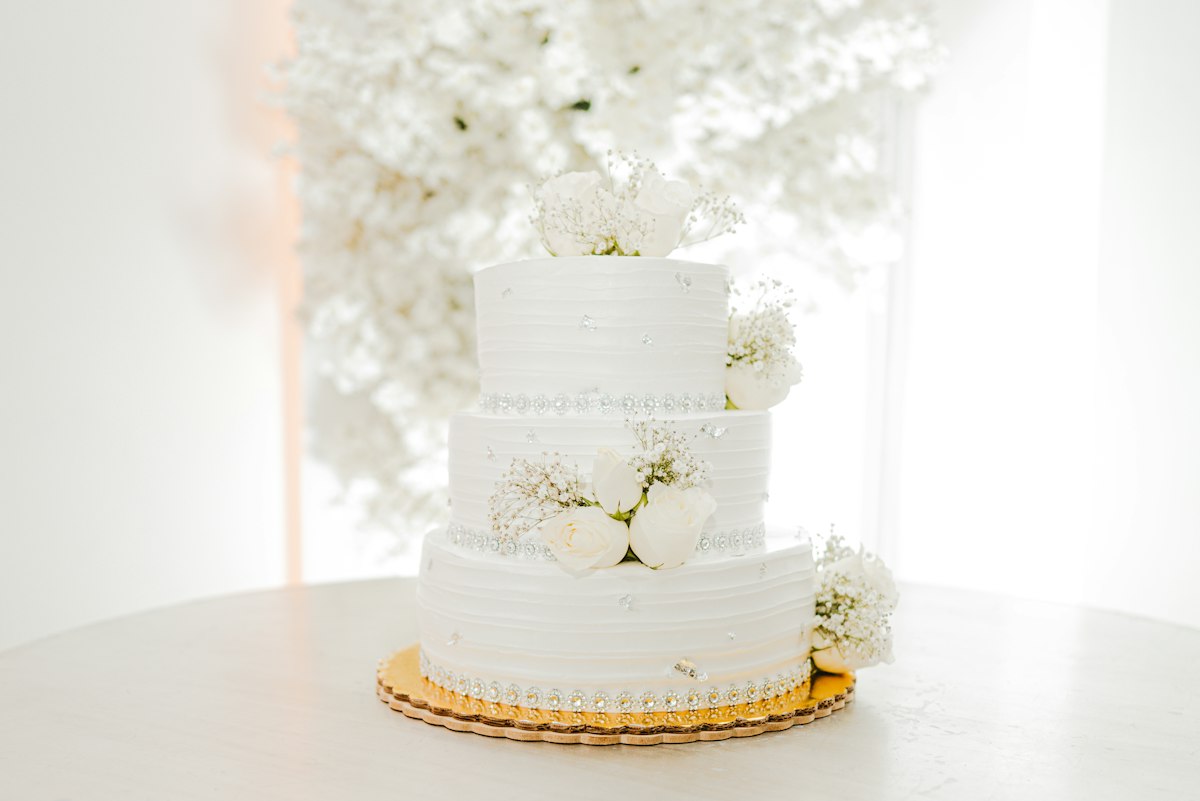
How Do You Transport a Tiered Cake?
In a tiered cake, every upper tier presses down on the tier below. Without support, the bottom tier compresses, bulges and can collapse on the first bump.
Build the support:
- Place each tier on its own board cut to that tier’s size.
- Insert dowels into each lower tier, cut level with the top of that tier. Wooden dowels, plastic dowels and wide boba straws are all used; more weight above means more dowels below.
- For tall or heavy cakes, a commercial support system, such as plate and pillar systems, carries the weight on the plates instead of the cake.
- For a cake that travels stacked, drive a sharpened center dowel down through all tiers and boards. It stops tiers from sliding apart on turns.
- Set the bottom tier on a drum, not a thin board.
Stacked or separate?
| Method | Advantages | Risks |
|---|---|---|
| Travel stacked | Finished on arrival; decoration across tiers is already done | Heavy; high center of gravity; needs a tall box and a center dowel |
| Travel as separate tiers | Lower, lighter boxes; much lower risk of leaning | Stacking and finishing on site; needs tools and time at the venue |
For long drives, very tall cakes or hot weather, separate tiers is the safer choice. Each tier goes in its own box sized to its board, and the final border is piped after stacking.
Tall stacked cakes are heavy enough to bend paperboard, so use a corrugated box for these. See corrugated boxes for rigid cake cartons.
How to Transport Cupcakes
Cupcakes fail in transit when they can move even slightly. One cupcake tips, and it smears the next.
- Use a box with an insert so each cupcake sits in its own cavity.
- Chill frosted cupcakes briefly so the swirl sets.
- Check that the lid clears the frosting peak; a lid that touches flattens every swirl.
- Keep the box level. Stack cupcake boxes only if the lower box is rigid enough to carry the upper one without bowing.
- For large orders, use several 12 or 24 count boxes rather than one oversized tray.
- Add toppers, edible decorations and picks on arrival when possible.
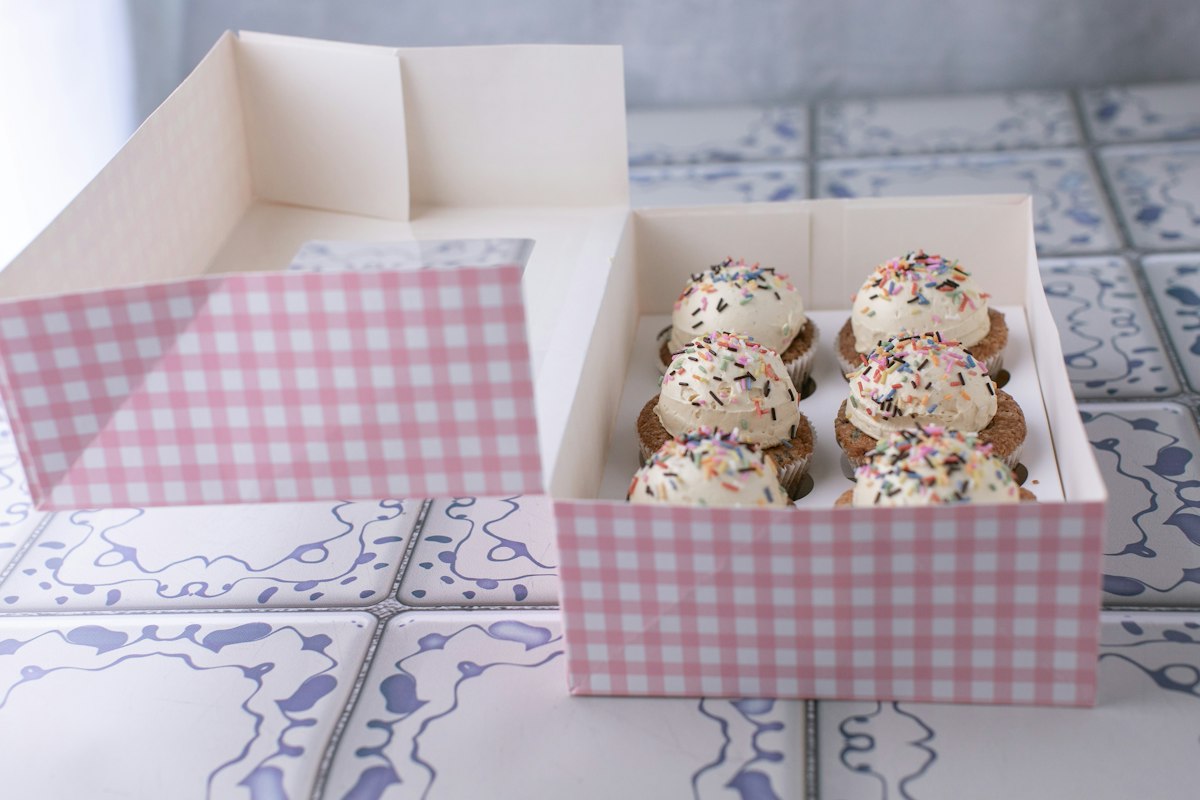
Cupcake boxes with inserts for 1, 2, 4, 6, 12 or 24 are at custom cupcake boxes.
Heat, Humidity and Timing
- Run the car’s air conditioning before loading so the cake enters a cool space.
- Keep the box out of direct sunlight; a sunny window heats one side of the cake.
- Make the cake delivery the last errand, and drive straight there.
- For long trips, use a large cooler or an insulated carrier with cold packs placed around the box, never touching the cake.
- On humid days, keep fondant cakes inside the closed box until they reach room temperature at the venue. Opening the box early lets moisture settle on the surface.
How to Transport a Cake Long Distance
- Bake and fill a day ahead so the cake settles before the trip.
- Chill the cake fully, then box it.
- Travel as separate tiers for anything over two tiers.
- Use a cooler or refrigerated vehicle for cream cheese, whipped cream or meringue buttercream.
- Carry decorations, flowers and toppers in a separate box.
- Plan to finish the cake at the destination.
Delivery Kit
Carry a small kit for repairs on site:
- Offset spatula and bench scraper
- A piping bag with extra frosting and the tips used on the cake
- Spare dowels and a small saw or cutter
- Paper towels, gloves and a small brush
- Toppers, flowers and candles packed separately
At the Venue
- Lift the box from below with both hands, never by the lid.
- Check that the display table is level before placing the cake.
- Open the box on the table, not in the air. A box with a removable lid or a fold down front makes it easier to slide the cake out without tilting it.
- Make small repairs, add toppers, then step back and check from every side.
Common Mistakes
- Putting the cake on a car seat.
- A board smaller than the box floor.
- Leaving the cake warm before the drive.
- Stacking tall tiers with no center dowel.
- Lifting a heavy cake by the box lid.
- Opening a fondant cake straight from the fridge in humid air.
For parcel delivery instead of a car, see how to ship cookies. For every box style a bakery uses, see custom bakery boxes.
Frequently Asked Questions
Should a cake be cold when you transport it?
Yes. A chilled cake has firm frosting and a firm crumb, so it resists dents, sliding and leaning. Most finishes travel best cold.
Can you put a cake on the car seat?
No. Seats slope backward and are soft, so the cake leans and shifts. Use the floor or a flat trunk on a non slip mat.
How do you transport a cake without a box?
Use a cake carrier with a locking base, or a rigid tray with a dome. Without any cover, the cake is exposed to dust, heat and contact, so a box or carrier is strongly recommended.
How long can a cake stay in a car?
As short a time as possible. Heat builds fast in a parked car, so never leave a cake in a car while running other errands. Go straight to the destination.
Do you need dowels for a two tier cake?
Yes. Even two tiers put enough weight on the bottom tier to compress it. Dowel the bottom tier and use a board under the top tier.
Can you stack cake boxes in the car?
Only light, rigid boxes, with the heavier box at the bottom. Never stack anything on top of a tall or tiered cake box.
How do you transport cupcakes without a carrier?
Use a box with an insert sized to your cupcakes. If you have no insert, cupcakes will slide and tip, so an insert matters more than the box itself.
Boxes Built for the Drive
Rigid cake and cupcake boxes sized to your boards and counts, so every order arrives the way it left your kitchen.
Browse Bakery Boxes