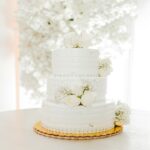


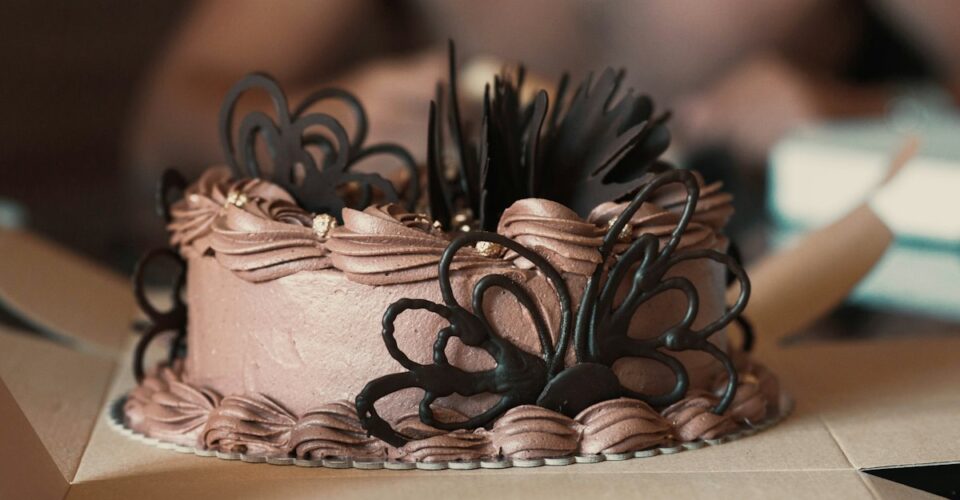
Every bakery box size comes down to three measurements: the board under the product, the tallest point of the decoration, and the inside dimension of the box. Get one wrong and the lid flattens the piping, or the cake slides into the wall on the first turn out of the parking lot.
A cake box should match the cake board, not the cake. Most bakers use a board 2 inches larger than the cake, so a 6 inch cake sits on an 8 inch board in an 8 x 8 inch box, an 8 inch cake goes in a 10 x 10 inch box, and a 10 inch cake in a 12 x 12 inch box. Box height is the tallest point of the cake, board and toppers included, plus clearance so the lid never touches.
Box sizes are written as length x width x depth, where depth is the height. For custom boxes these are normally inside dimensions, because the product sits inside. The outside of the box is always larger by the thickness of the board, which matters when a box has to fit a shelf, a display case or a shipping carton.
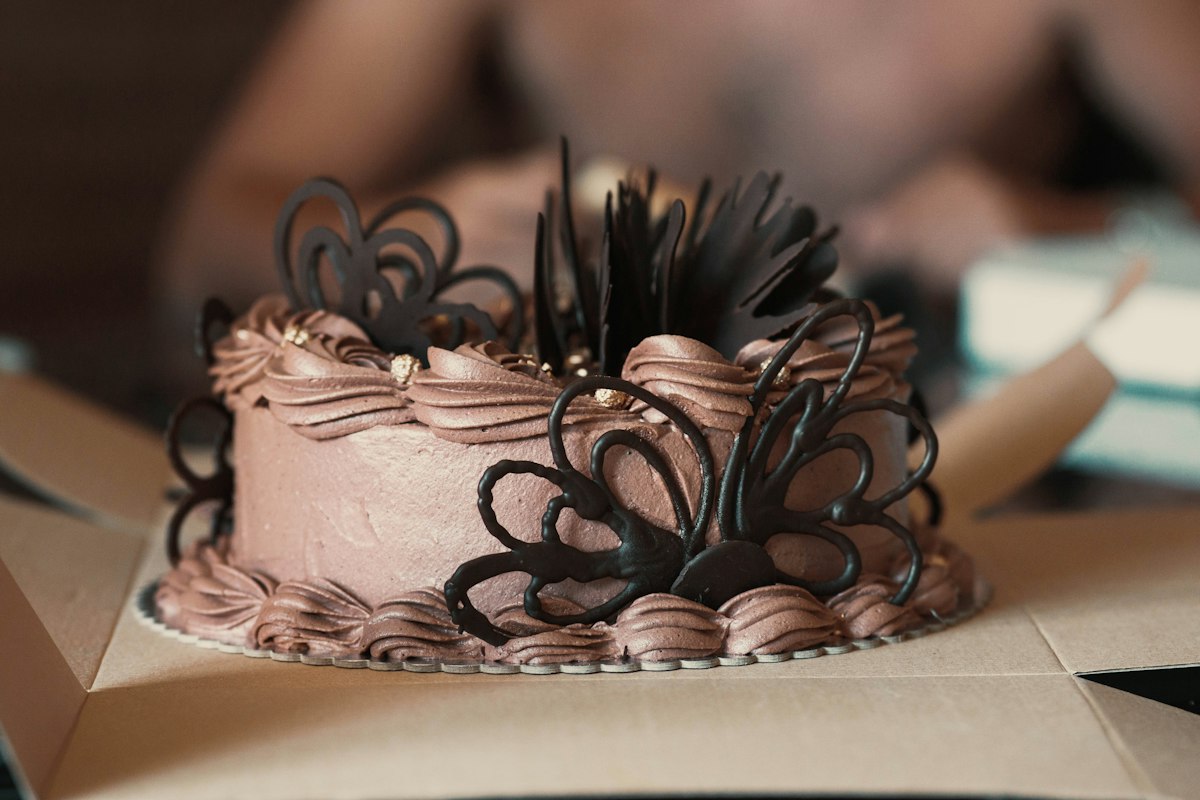
Cake Board vs Cake Drum: Why the Base Sets the Box
The base under the cake decides the box footprint, and the two common bases behave differently.
| Base | What it is | Best for | Effect on box |
|---|---|---|---|
| Cake board or circle | Thin corrugated or coated card | Single tier cakes, light cakes, cheesecakes | Adds little height; footprint equals board size |
| Cake drum | Thick, rigid board, often about 1/2 inch | Heavy cakes, tiered cakes, wedding cakes | Adds height; include the drum in the height measurement |
A board the same size as the box floor cannot shift. A board 1 inch smaller than the floor leaves room to slide, and that sliding is what scuffs the sides of a cake in transit.
Round and Square Cake Box Size Chart
| Cake size | Board (2 in rule) | Box (2 in rule) | Board (4 in rule) | Box (4 in rule) |
|---|---|---|---|---|
| 6 in | 8 in | 8 x 8 in | 10 in | 10 x 10 in |
| 8 in | 10 in | 10 x 10 in | 12 in | 12 x 12 in |
| 10 in | 12 in | 12 x 12 in | 14 in | 14 x 14 in |
| 12 in | 14 in | 14 x 14 in | 16 in | 16 x 16 in |
| 14 in | 16 in | 16 x 16 in | 18 in | 18 x 18 in |
The 2 inch rule gives 1 inch of board on every side, enough for a piped border. The 4 inch rule gives 2 inches per side, which suits heavily decorated cakes, cakes with fruit or flowers around the base, and cakes that need a firm grip when lifted. Square cakes follow the same chart using the edge length.
What Size Box Do You Need for an 8 Inch Cake?
An 8 inch round or square cake on a 10 inch board needs a 10 x 10 inch box. On a 12 inch board or drum, it needs a 12 x 12 inch box. The footprint is the easy part. The height depends on how the cake is built:
- Single or two layer cake: a standard depth cake box suits most of these. Measure first if the top has tall piping.
- Three or four layer cake: needs a tall box. Measure from the bottom of the board to the top of the cake.
- Double barrel cake: a cake roughly twice the height of a standard layer cake needs a tall box or a box with a deep lid.
- Cake with toppers, sugar flowers or candles: measure to the highest point of the topper, or pack the topper separately and fit it on arrival.
If you sell several heights in the same diameter, a two piece box with a separate base and lid, or a tall box with a removable insert, lets one footprint carry every cake in that size.
Sheet Cake Box Sizes
Sheet pan sizes vary between bakeries, so measure your own pan before ordering. Commonly cited sizes are 9 x 13 inches for a quarter sheet, 11 x 15 or 12 x 18 inches for a half sheet, and 16 x 24 or 18 x 24 inches for a full sheet. Apply the same board rule:
| Sheet cake | Board (2 in rule) | Box footprint |
|---|---|---|
| 9 x 13 in (quarter) | 11 x 15 in | 11 x 15 in |
| 11 x 15 in (half) | 13 x 17 in | 13 x 17 in |
| 12 x 18 in (half) | 14 x 20 in | 14 x 20 in |
Sheet cakes are heavy and flat, so the base must stay rigid when the box is lifted from the ends. A box that bends in the middle cracks the cake along its center line.
Tiered Cake Boxes
A tiered cake moved fully stacked needs a box sized to the bottom tier’s drum and tall enough for the full stack. Many bakers instead box each tier separately and stack at the venue. In that case, size each box to that tier’s own board. Tall and heavy tiered cakes are where paperboard stops being enough; a corrugated box keeps its shape under the weight. See the corrugated boxes range for heavy cake cartons.
How Do You Choose a Cupcake Box Size?
Cupcake boxes are sized by count, cavity spacing and height. The base of the liner is only the starting point, because the frosting on top is usually wider than the base.
| Liner type | Approximate base | Notes |
|---|---|---|
| Mini | about 1 1/4 in | Needs its own insert; standard cavities let minis tip |
| Standard | about 2 in | The default for retail cupcake boxes |
| Jumbo | about 2 1/2 in | Needs wider cavities and a taller box |
Liner sizes vary slightly by brand, so measure the cupcakes you actually bake.
| Count | Insert layout | Typical use |
|---|---|---|
| 1 | Single cavity | Favors, single sales |
| 2 | 1 x 2 | Gift pairs |
| 4 | 2 x 2 | Small gift boxes |
| 6 | 2 x 3 | Retail half dozen |
| 12 | 3 x 4 | Retail dozen |
| 24 | 4 x 6 | Events and catering |
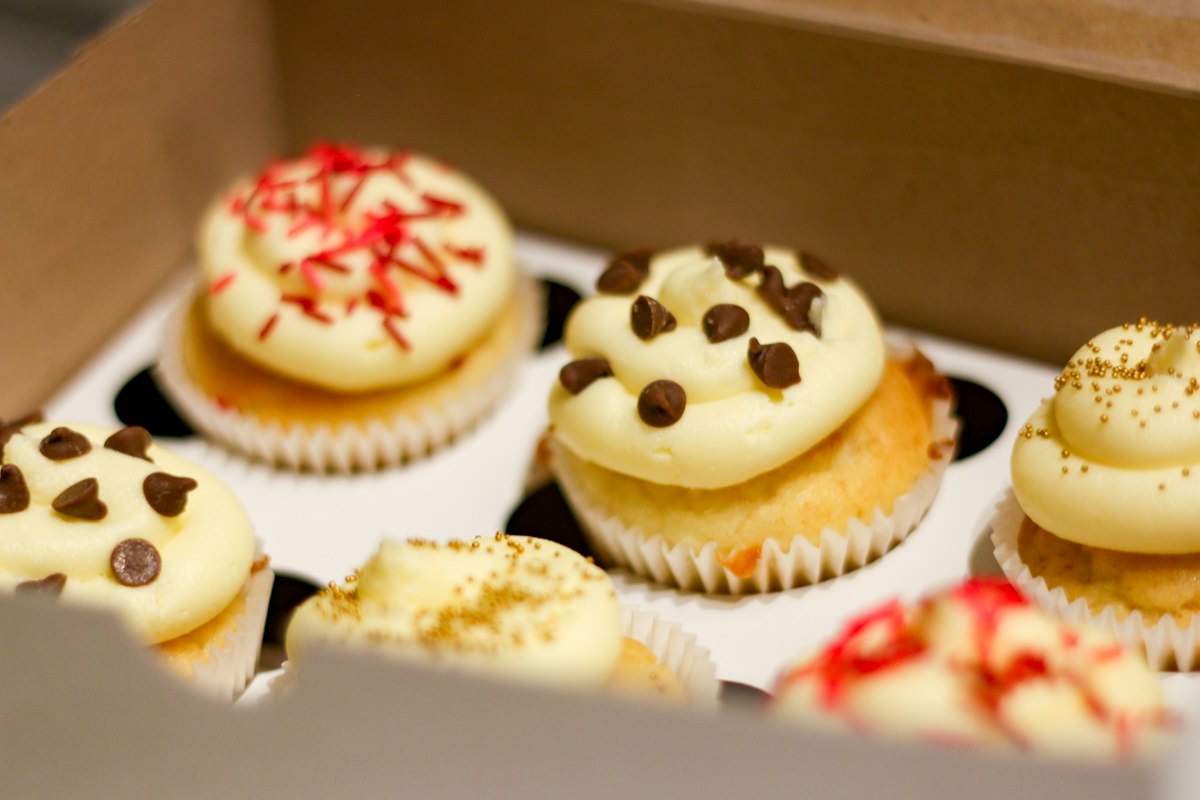
To size the box:
- Measure the widest point of a finished cupcake, frosting included. That sets the cavity spacing.
- Multiply by the insert layout and add the wall clearance to get the footprint.
- Measure from the bottom of the liner to the top of the frosting peak. That sets the box height.
- For tall swirls, choose a taller box or a box with a raised window lid so the frosting never touches.
Cupcake boxes with inserts cut for your count and liner size are at custom cupcake boxes.
Cookie, Macaron, Donut, Pastry and Pie Box Sizes
| Product | What to measure | Sizing rule |
|---|---|---|
| Cookies | Diameter and stack height | One row per stack; a box sized to the stack stops cookies rubbing and chipping |
| Decorated sugar cookies | Length, width and icing height | Single layer, flat; leave space so icing does not touch the lid |
| Macarons | Diameter and row length | Macarons sit on edge in a row; width follows diameter, length follows count |
| Donuts | Largest donut and count | Leave clearance above glaze and toppings |
| Pastries and croissants | Longest piece | Length decides the box; height follows the tallest piece |
| Pies | Outer rim of the pie plate | Size the box to the rim, not the filling; a deep dish pie needs a deeper box |
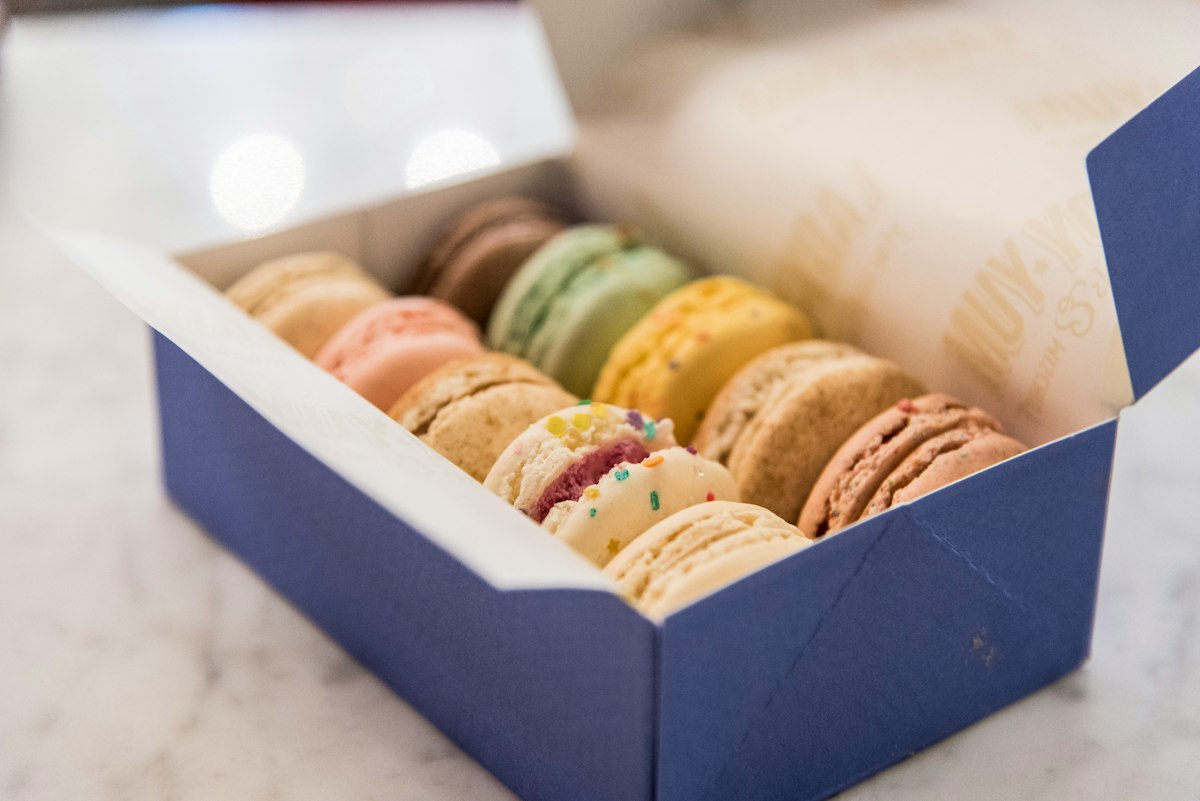
For cookies, see custom cookie boxes, and for macarons, custom macaron boxes.
Box Material by Size and Weight
Size and weight decide the material as much as style does.
| Material | Suits | Why |
|---|---|---|
| SBS paperboard | Cupcakes, cookies, macarons, pastries, light cakes | Smooth white surface for print; light weight |
| Kraft paperboard | The same products with a natural look | Brown fiber finish; similar strength to SBS at the same thickness |
| E flute corrugated (about 1/16 in) | Heavy cakes, tall cakes, sheet cakes | Flute layer adds stiffness without much bulk |
| B flute corrugated (about 1/8 in) | Tiered cakes and outer shipping cartons | Higher crush resistance for stacking and carrying |
Butter rich pastries and buttercream can mark plain board, so ask for a grease resistant coating or a liner when the food touches the box.
How to Measure Before You Order
- Measure the board or drum for length and width, not the cake.
- Measure the tallest point, including the drum, decorations and toppers.
- Decide on inside dimensions and confirm the supplier quotes inside size.
- Check the outside size against shelves, display cases and any shipping carton.
- Order a sample and test one finished product before the full run.
Common Sizing Mistakes
- Measuring the cake instead of the board.
- Forgetting the height of the drum.
- Using a standard cupcake insert for minis or jumbos.
- Ordering by outside dimensions and finding the product does not fit.
- One oversized box for every cake, which lets smaller cakes slide.
Once the size is set, moving the cake is the next risk. See how to transport a cake for the drive, and how to ship cookies for parcel delivery. For every bakery box style in these sizes, browse custom bakery boxes.
Frequently Asked Questions
What size cake box do I need for a 6 inch cake?
An 8 x 8 inch box if the cake sits on an 8 inch board, or a 10 x 10 inch box on a 10 inch board. The box should match the board so it cannot slide.
What size box fits a 10 inch cake?
A 12 x 12 inch box on a 12 inch board, or a 14 x 14 inch box if you use a 14 inch drum for extra border space.
How tall should a cake box be?
Taller than the highest point of the cake, measured from the bottom of the board or drum and including toppers. The lid should never touch the decoration.
Are cake box sizes inside or outside dimensions?
Custom boxes are usually specified by inside dimensions, since the product has to fit inside. Always confirm with the supplier, because the outside is larger by the board thickness.
What size box is needed for a quarter sheet cake?
A 9 x 13 inch quarter sheet on an 11 x 15 inch board needs an 11 x 15 inch box. Measure your pan, since sheet sizes vary.
What is the difference between a cake board and a cake drum?
A cake board is thin card for light, single tier cakes. A cake drum is thicker and rigid, made for heavy or tiered cakes, and it adds to the height of the box you need.
What size box holds a dozen cupcakes?
A box with a 3 x 4 insert. The exact footprint depends on the width of your frosted cupcakes, so measure one before choosing the cavity spacing.
Can I use one box size for several cake sizes?
Only with a board that fills the box floor. A small cake on a matching large board works; a small cake loose in a large box will slide.
Boxes Cut to Your Exact Size
Send your cake, board or cupcake measurements and get a box built to fit, with inserts and print matched to your bakery.
Browse Bakery Boxes