
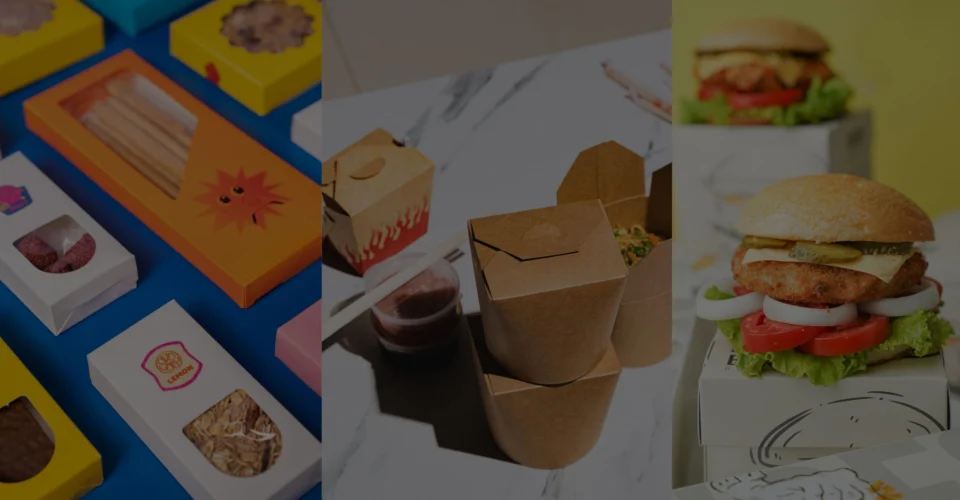
Most bakery brands lose sales twice. First when the packaging fails to stop moisture, grease, or air from reaching the product. Second when the packaging looks so generic on a retail shelf that the customer picks up a competitor’s product instead. Premium customized bakery packaging solves both problems with the same box. This guide covers the materials, formats, coatings, and design decisions that determine whether your packaging protects your product and sells it at the same time.
Why Generic Boxes Fail Bakery Products
A standard uncoated cardboard box does not resist grease. Butter, oil, and fat migrate through uncoated board within hours, and a grease-stained box on a retail shelf communicates exactly the opposite of what a bakery brand needs to communicate. It tells the customer that the product inside is cheap, handled carelessly, or close to expiring.
The second failure point is moisture. Baked goods lose moisture to the environment and absorb it back if the packaging allows it. A soft brioche in packaging with no moisture barrier goes stale faster because the box breathes in both directions. A crusty sourdough in a sealed, non-perforated bag goes soggy for the same reason, because it needs to breathe outward and the packaging traps humidity against the crust.
These are not design problems. They are material science problems. Solving them requires choosing the right board grade and coating for the specific baked good, not just picking any food-grade box.
How Baked Goods Actually Go Stale
Understanding the science behind staleness helps you choose packaging that works instead of packaging that just looks good on paper.
Bread and soft baked goods go stale primarily through starch retrogradation. When starch cools after baking, the starch molecules begin recrystallizing, and the product firms up and loses its original texture. This process happens at refrigerator temperatures faster than at room temperature, which is why refrigerated bread goes stale quicker than bread stored at room temperature. Packaging that limits air exchange slows moisture loss from the crumb, which slows the retrogradation process and extends soft texture.
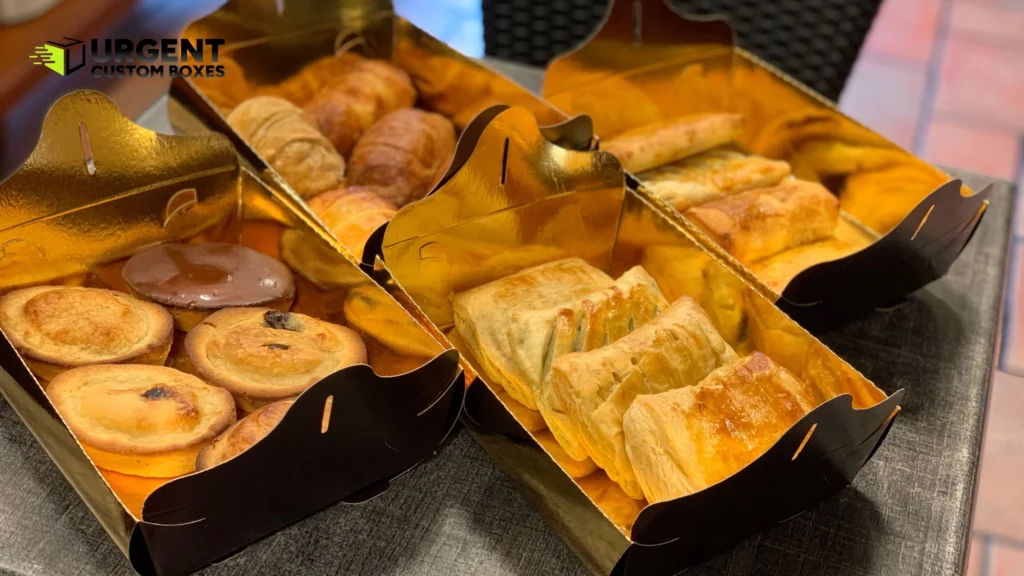
Crusty artisan breads require the opposite approach. The crust depends on a low-moisture surface. If you seal an artisan sourdough in an airtight bag, the crust absorbs moisture from the crumb within hours and turns leathery and soft. Micro-perforated packaging allows excess humidity to escape while the paper layer still protects the crust from physical damage and contamination.
Pastries with cream fillings, fresh fruit, or custard are the most sensitive category. These products require customized packaging that separates moisture from the outer layer of pastry dough. A damp environment softens the pastry shell and causes filling migration. The right packaging here is a rigid structure with an insert or divider that prevents contact between products, combined with a food-safe coating that limits humidity exchange.
Cookies and dry baked goods have a longer natural shelf life but are vulnerable to grease migration and humidity absorption. A grease-resistant lining inside the box stops visible oil staining on the exterior. A moisture barrier coating on the interior prevents the cookies from absorbing ambient humidity and softening prematurely.
Materials Used in Custom Bakery Packaging
SBS Paperboard (Solid Bleached Sulfate) is the standard for premium bakery packaging. It has a bright white surface that takes full-color CMYK printing sharply. The smooth bleached surface makes logos, food photography, and brand colors look clean and professional. SBS board comes in weights from 12 to 20 pt. For a standard retail pastry box, 14 pt to 16 pt is the practical range. Below 14 pt the box feels flimsy on the shelf. Above 18 pt you are paying for structural weight your product does not require.
Kraft Paperboard is the right choice when your brand positions itself as artisan, organic, sustainable, or handcrafted. The natural brown color communicates earthy provenance and works well with simple one or two-color logo printing in white or black. Kraft board also has natural moderate grease resistance from the pulp composition, which makes it a practical choice for buttery pastries, croissants, and scones before any additional coating is applied. White kraft gives the natural texture of kraft with a slightly brighter surface for brands that want the sustainable look but need better print contrast.
Corrugated Kraft is used for larger orders, catering boxes, and shipping applications where structural strength matters more than print quality. A corrugated bakery box handles stacking weight in a delivery vehicle and insulates temperature-sensitive products better than solid board. If your bakery ships direct to consumers by courier or delivers to wholesale accounts, corrugated is the right outer material.
Food-Grade Coatings are applied over the base board and determine how the packaging performs against grease and moisture. An aqueous grease-resistant coating stops oil migration without making the board non-recyclable. A poly-lining adds a thin polyethylene layer inside the box for stronger moisture and grease barrier performance. Wax coating creates a water-resistant interior surface and works well for products stored in refrigerated display cases. New generation plant-based OGR (oil and grease resistant) coatings, including SBS-based variants launched commercially in 2026, deliver medium barrier performance without plastic content and remain home compostable.
Bakery Box Formats and When to Use Each
Tuck-Top Box is the most widely used format in retail bakery packaging. The top tucks closed without adhesive, which allows it to be opened and resealed. It works for cookies, brownies, macarons, and any single-layer product that does not require structural support from above. The flat surface area of a tuck-top box provides maximum printable space for branding, ingredient labeling, and nutritional information.
Auto-Bottom Box (also called a snap-lock bottom) assembles faster than a tuck-top because the bottom snaps into position without folding. This format suits high-volume bakeries where staff pack orders quickly. The auto-bottom provides better base stability than a standard tuck-end, which makes it the right choice for heavier products like fruit tarts, dense cakes, or boxed sets of multiple pastries.
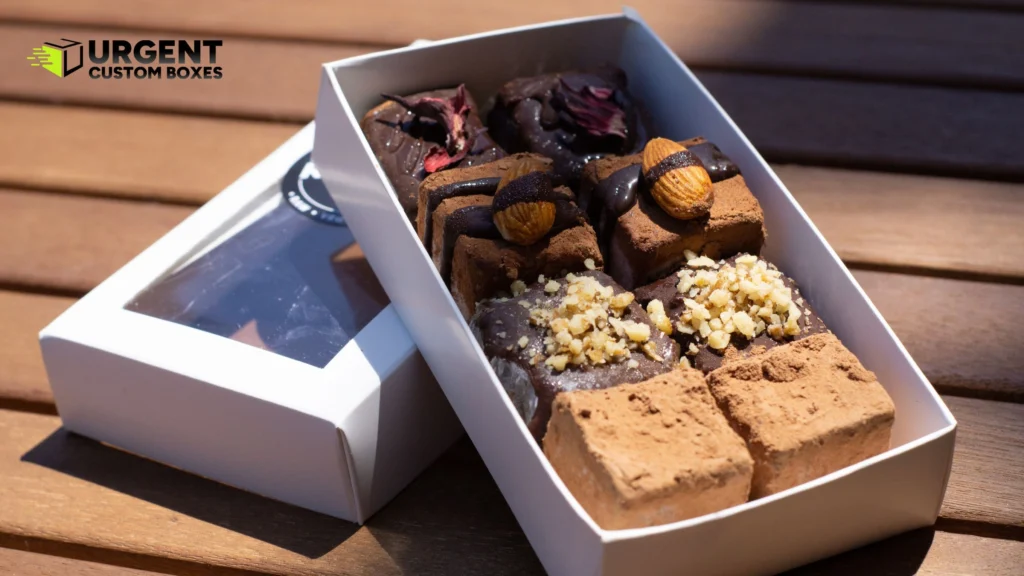
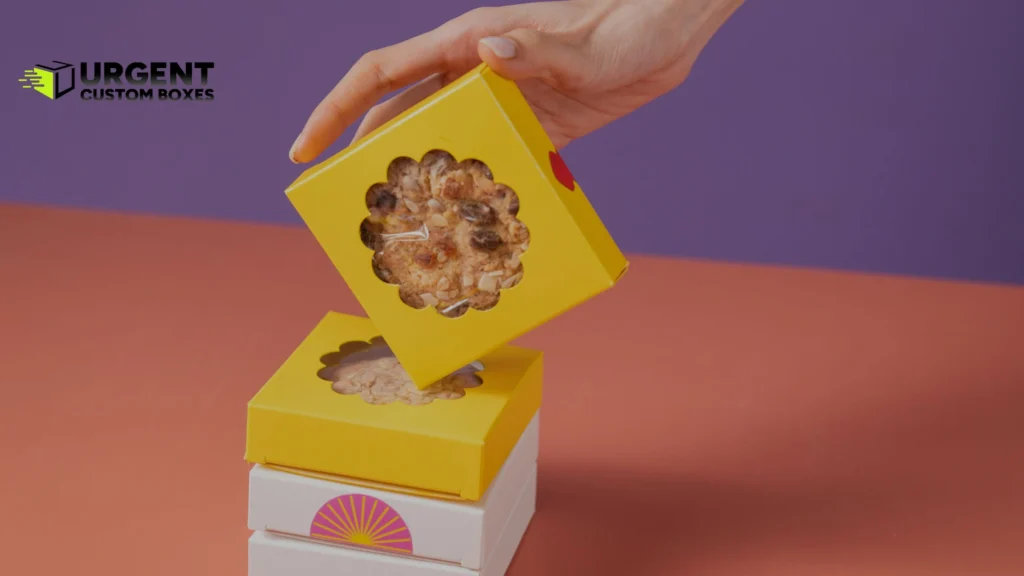
Window Bakery Box adds a PVC or PET film panel to the front, top, or side of the box so the customer sees the product before buying. PET film is the better choice for bakery applications because it resists fogging from warm baked goods. A clear window works as a passive sales tool because customers make purchase decisions faster when they can see the product. For retail shelf placement, a front window on a tuck-top box turns the product into its own display. For a bakery counter or cafe display case, a top window on a hinged lid box lets customers view decorated cakes and pastries without opening the packaging.
Gable Box has a handle integrated into the structure at the top. This format works for takeaway orders, gift sets, and market stall packaging where the customer carries the product directly from the point of sale. A gable box communicates a handmade, boutique feel and works well with kraft board and minimal print for artisan bakery brands.
Rigid Bakery Box is the right format for premium gift packaging, wedding favors, high-end patisserie products, and any bakery item positioned at a price point where the packaging is part of the perceived value. A rigid box with a two-piece lid and base structure, soft-touch lamination on the outside, and a food-safe insert inside delivers a presentation that a folding carton cannot replicate. At Urgent Custom Boxes, our custom rigid boxes are available for bakery brands that sell gift sets, seasonal collections, or premium product lines where the unboxing moment matters.
Bakery Bag with Window is a flexible format used for bread loaves, cookies sold by weight, and artisan baked goods sold at farmers markets or specialty grocery stores. Kraft paper bags with a window and a gusset base stand upright on a shelf. The window panel shows the product, the kraft surface carries the brand, and the gusseted base keeps the bag stable without support. This format ships flat and assembles instantly, which makes it practical for small bakeries with limited storage.
Product-by-Product Packaging Guide
Croissants and Pastries: Use a grease-resistant SBS or white kraft box with a PET window. Croissants release butter during storage, and uncoated board shows grease staining within two to four hours at room temperature. A poly-lined interior on the base panel stops visible grease marks. A window on the front or lid shows the golden laminated layers and drives impulse purchase.
Cupcakes: Use a rigid base box with custom foam or card inserts that hold each cupcake by the base without touching the frosting. Standard cupcake inserts hold 2, 4, 6, or 12 cups depending on the box size. The insert keeps cupcakes separated so frosting does not transfer between products and each cupcake arrives at the customer in the same condition it left your kitchen.
Macarons: Macarons need a rigid or semi-rigid box with a custom card tray insert that holds each macaron in a dedicated cell. Macarons are fragile and absorb humidity quickly, which causes them to soften and lose their foot and shell texture within hours. The insert prevents physical contact between macarons, and a moisture-barrier coating inside the box slows humidity exchange. Custom macaron boxes with a clear lid show the full color range of the product and communicate the quality of the contents before the box is opened.
Artisan Bread: Use a micro-perforated kraft bag or a breathable paper sleeve. Do not seal artisan bread in airtight plastic or poly-lined paper. The crust depends on moisture escaping the product after baking, and sealed packaging reverses that process. A kraft paper sleeve with your brand printed on it keeps the bread protected from physical damage and contamination while allowing the crust to maintain its texture.
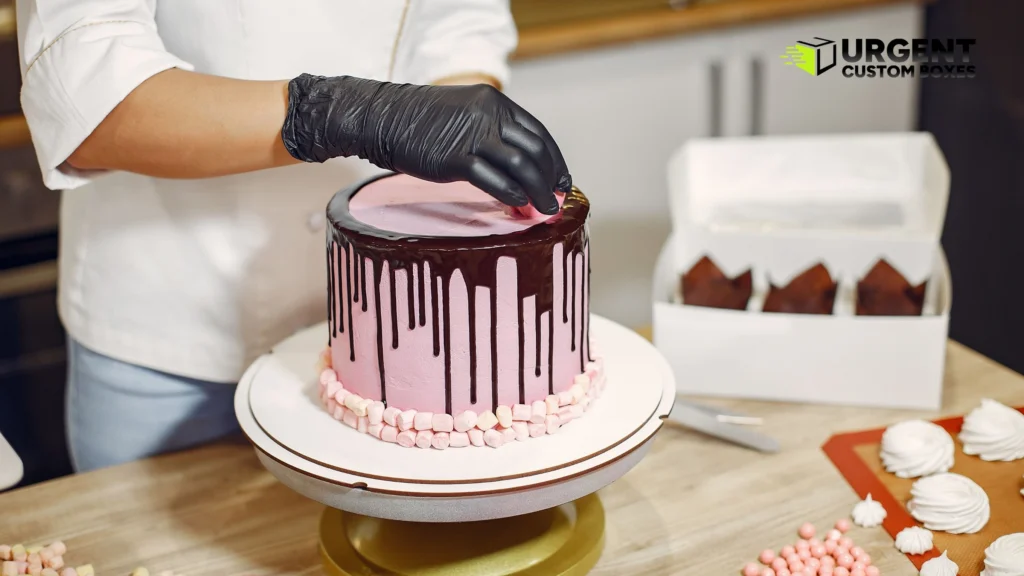
Cakes: Cakes sold whole require a base board, a box tall enough to protect any frosting decoration, and a window if the decoration is a selling point. The box base should be scored to accommodate a cake board underneath the product. Corrugated board sides handle the stacking weight from shipping or display, and a clear PET window on the front or top lets customers assess the decoration without opening the box.
Cookies: Use a tuck-top or windowed folding carton with a grease-resistant interior lining. Cookies sold individually in cellophane with a branded sticker are suitable for counter or impulse display. Cookies sold in boxes of 6, 12, or 24 benefit from a card insert or tissue paper base that prevents sliding and breakage during handling.
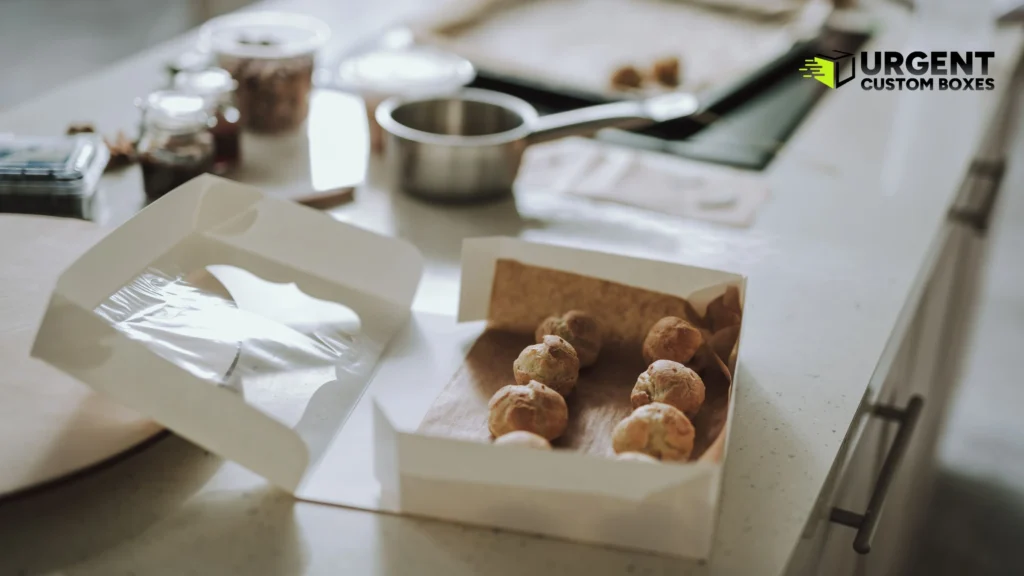
Brownies: Use a kraft or white SBS tuck-top box with an oil-resistant liner. Brownies are dense and oily, and unlined packaging shows grease staining faster than almost any other baked product. A wax-lined interior on a kraft box handles the oil content while the kraft exterior communicates the artisan, handmade positioning that most brownie brands use.
What Makes Bakery Packaging Work on a Retail Shelf
Shelf presence for bakery packaging is determined by four factors: color contrast against the surrounding products, information hierarchy, structural stability when stacked, and the visibility of the product itself.
Color contrast matters because bakery retail shelves are typically beige, brown, and white. A brand that uses a strong secondary color, deep navy, forest green, terracotta, or matte black, stands out immediately against the natural color field of bread, pastry, and kraft boxes. The color does not need to cover the entire box. A branded color band across the top third of a white SBS tuck-top, with the product visible through a window below, creates clear shelf differentiation without competing with the product photography.
Information hierarchy on a bakery box follows a specific order the customer reads before buying. First they see the brand name or logo. Second they see the product name. Third they see a visual of the product, either through a window or from a printed food photograph. Fourth they look for ingredient or allergen information if they have dietary restrictions. Most bakery packaging tries to include too much on the front panel and ends up with text the customer ignores. The brand name, one product descriptor, and a clear product view covers everything the customer needs to make a purchase decision at the shelf.
Structural stability determines how long a box maintains its shelf presence over a day of retail handling. A tuck-top box in 14 pt SBS holds its shape for a full day of customer handling without collapsing or losing its flat front panel. A lighter board grade starts to show compression marks and corner damage by mid-morning. For multi-unit shelf stacking, corrugated sides or a heavier board grade maintain display integrity.
Finishes That Work for Bakery Packaging
Matte lamination is the most used finish on premium bakery packaging. It creates a soft, tactile surface that communicates craft and quality. Matte packaging photographs better on social media than gloss, which makes it valuable for bakery brands that rely on Instagram or TikTok for customer acquisition.
Gloss lamination creates a clean, modern surface and works well for bakery brands positioned as contemporary rather than artisan. Gloss also provides moderate moisture resistance on the exterior panel, which protects the print from humidity in refrigerated display cases.
Spot UV coating applies a high-gloss varnish over selected areas of a matte surface. Using spot UV on a logo against a matte background creates a contrast that draws the eye to the brand name without adding metallic cost. This finish works well on premium bakery gift boxes and seasonal packaging.
Foil stamping in gold or silver works for wedding cake packaging, gift sets, and seasonal collections where the premium positioning justifies the additional cost per unit.
Soy-based food-safe inks are now the standard for bakery packaging printing. Conventional petroleum-based inks are not suitable for direct food contact. Any printing that will be in contact with food product must use food-safe ink formulations. For packaging where the ink is on the exterior only and separated from the product by the board and coating, this is less critical, but for any direct-contact application it is non-negotiable.
Eco-Friendly Options That Actually Work
Consumer demand for sustainable bakery packaging is real and growing. A 2026 industry survey found that 68 percent of US consumers reported preferring brands that use recyclable or compostable packaging, and this preference is strongest in the specialty food and artisan bakery category.
The practical sustainable options for bakery packaging are recycled kraft board, FSC-certified paperboard, plant-based OGR coatings instead of poly-lining, and soy-based inks. These options perform comparably to conventional materials in most bakery applications and carry certification marks that communicate sustainability credibly to the end customer.
Compostable packaging is the most requested but requires the clearest communication. A box that is technically home-compostable but labeled only with a certification logo that most consumers do not recognize does not deliver the brand benefit you paid for. Print “home compostable” explicitly on the packaging with the certification mark alongside it.
Avoid making sustainability claims you cannot substantiate. “Eco-friendly packaging” without specifying the material or certification is a claim that increasingly sophisticated consumers and retail buyers read as marketing language, not a verifiable commitment.
Bakery Packaging for Direct-to-Consumer Shipping
Shipping baked goods directly to customers requires packaging that performs under courier handling conditions, not just retail shelf conditions. A standard retail folding carton survives a customer picking it up and carrying it to a checkout counter. It does not reliably survive being sorted through a courier hub, stacked under other packages in a delivery vehicle, and dropped on a doorstep.
For direct-to-consumer bakery shipping, the inner packaging protects the product and the outer packaging protects the inner packaging. The inner layer is your branded custom bakery box. The outer layer is a corrugated shipper sized to fit the inner box with enough clearance for kraft paper fill or tissue to prevent movement. At Urgent Custom Boxes, our custom mailer boxes serve this function for bakery brands that ship by courier. A custom printed mailer box with your brand on the exterior maintains brand presentation at the doorstep while the corrugated structure handles the physical stress of transit.
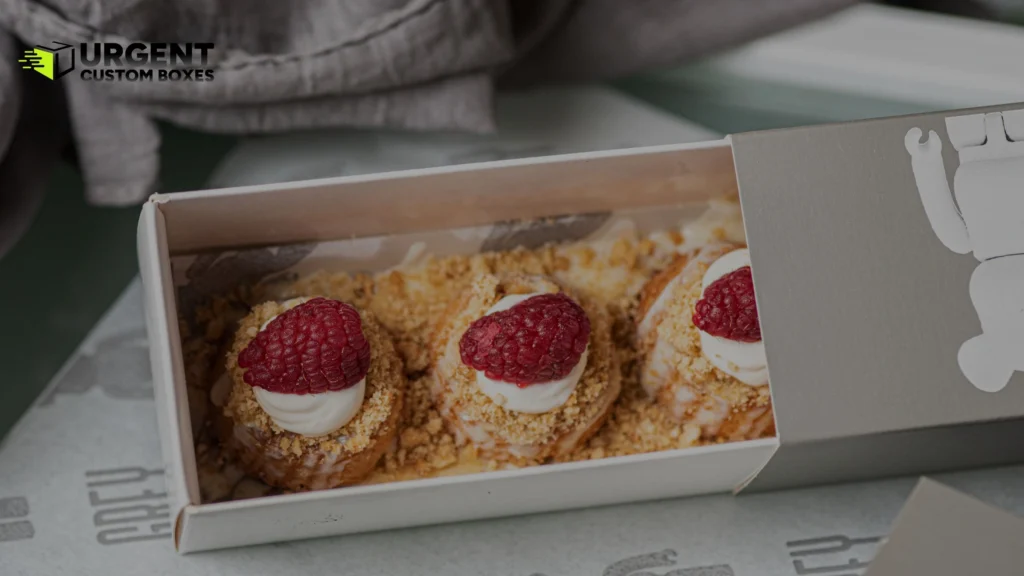
For fragile products like macarons or tiered cakes, add a foam insert between the inner box and the outer mailer. The foam absorbs impact that the corrugated structure alone does not fully dampen.
Products with cream fillings or fresh fruit components require refrigerated shipping. No amount of packaging quality extends the shelf life of a fresh cream pastry beyond what the cold chain allows. Insulated mailers with gel packs handle transit times up to 48 hours in most continental US conditions. For longer transit or warmer destinations, dry ice with ventilation holes in the outer carton is required.
Connecting Your Packaging to Your Full Brand Range
Bakery brands that also sell candy, confections, or specialty food items need packaging that maintains visual consistency across all product categories. A customer who buys your croissants in a kraft window box should recognize your brand immediately on your custom candy packaging boxes when they see them in the same store.
Consistency across your packaging range is built through a shared set of visual elements: a consistent board choice (all kraft or all white SBS across your range), a consistent color treatment (the same brand color on every box regardless of format), and a consistent typography system (the same font hierarchy on every SKU).
Custom gift boxes for seasonal bakery collections or corporate gifting follow the same brand visual system but use a heavier board grade and a higher-finish lamination. A bakery brand that sells individual pastry boxes week to week can build a gifting revenue stream with a rigid two-piece gift box in the same brand colors, packaged with customized tissue paper and a branded insert card. This is a separate SKU with a separate price point and a completely different margin profile from individual retail packaging.
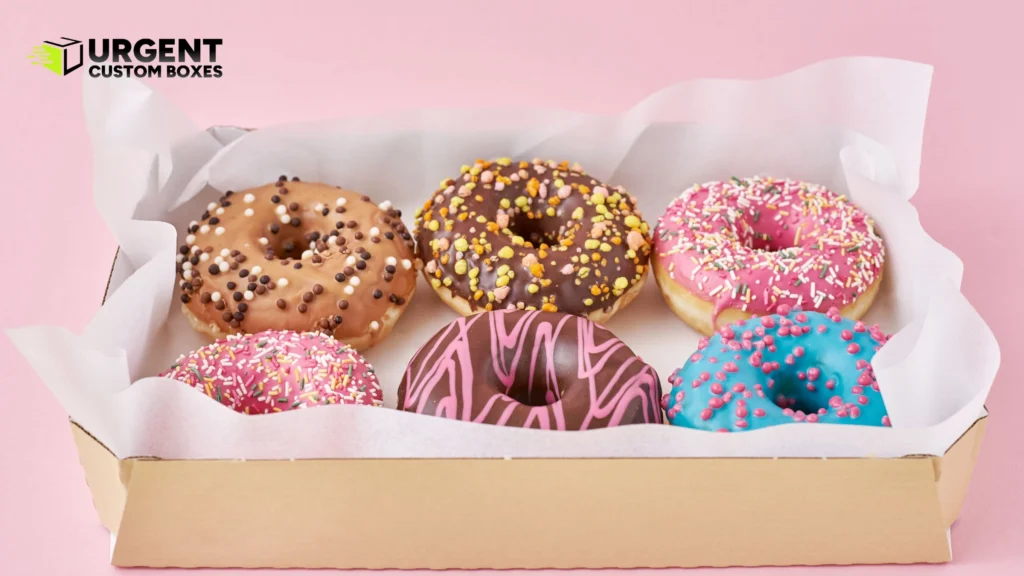
How to Order Custom Bakery Packaging from Urgent Custom Boxes
At Urgent Custom Boxes, we work with bakery brands at every stage, from single-product startups ordering 100 units to established bakeries ordering 10,000 units per SKU.
The process starts with your product dimensions. Measure your product at its widest point in each direction and add clearance for any insert, divider, or protective layer. We use those dimensions to send you a dieline template that shows every panel and fold of your box before any artwork is placed.
We offer free design support on all orders. If you have brand guidelines and a logo, our design team builds a production-ready artwork file at no additional cost. If you are starting from scratch, we provide design direction based on your target customer, your product category, and the shelf environment where your product will be sold.
Our standard production turnaround for custom bakery packaging is 10 to 15 business days from artwork approval. Rush production is available for time-sensitive launches and seasonal orders. We ship to all US states with free shipping on qualifying orders.
Request a quote at urgentcustomboxes.com with your box type, dimensions, quantity, and material preference. We respond with pricing and a production timeline within 24 hours.
Frequently Asked Questions
What is the best material for custom bakery boxes?
SBS paperboard in 14 pt to 16 pt is the standard for premium retail bakery packaging. It takes sharp full-color printing, accepts food-safe coatings, and holds its structure on a retail shelf. Kraft board is the right choice for artisan and sustainable-positioned brands. Corrugated kraft is used for shipping applications and large catering orders where structural strength takes priority over print quality.
Do custom bakery boxes need a food-safe coating?
The interior surface of any bakery box that contacts the product directly needs a food-safe coating or lining. For oily products like croissants, brownies, or cookies, an aqueous grease-resistant coating or poly lining on the interior panel stops grease migration and prevents visible staining. For any product that does not contact the box interior directly, a standard food-grade board without additional coating is acceptable.
How do you keep baked goods fresh in custom packaging?
Match the packaging to the moisture requirements of the specific product. Soft breads and pastries need a moisture-barrier coating to slow drying. Crusty artisan breads need micro-perforated or breathable packaging to allow humidity to escape. Cream-filled pastries need a rigid structure with inserts to prevent physical damage and a coating that limits humidity exchange. There is no single packaging format that keeps all baked goods fresh. The material and structure must match the product.
Can you ship custom bakery boxes in small quantities?
Yes. At Urgent Custom Boxes we accept orders starting at low minimum quantities for all bakery box formats. Small batch orders are practical for product launches, seasonal runs, and design testing before committing to a larger production volume.
What size box do I need for a dozen cupcakes?
A standard 12-count cupcake box is typically 14 inches by 10 inches by 4 inches, but the right dimensions depend on your cupcake size and frosting height. The insert cell diameter needs to match the base diameter of your cupcake liner. We recommend measuring your cupcake at the widest point of the liner and at the tallest point of the frosting, then adding 0.5 inches of clearance in each direction when specifying box dimensions.
The Bottom Line
Custom bakery packaging that keeps food fresh and looks great on the shelf is not a design challenge. It is a material and format decision that starts with understanding what your specific product needs to stay fresh, then builds the brand presentation on top of that functional foundation. Get the material and coating right first. Then design the exterior to stop the customer on the shelf.
Urgent Custom Boxes produces custom bakery packaging boxes, custom food packaging boxes, custom mailer boxes for DTC bakery shipping, and custom gift boxes for premium bakery gifting applications. Every order includes free design support and a 24-hour quote turnaround. Request your quote at urgentcustomboxes.com and tell us your product, your volume, and your timeline.