



Aluminum Foil Layer
Aluminum Foil Layer in Custom Mylar Bags – The Barrier Core That Protects Everything Inside
There is one layer inside every serious Mylar bag that does more protective work than any other component in the entire structure. It is not the outer print surface. It is not the heat-seal inner film. It is the aluminum foil core – the middle layer that sits between everything your customer sees and everything your product needs to survive.
Most brand owners ordering custom packaging for the first time focus almost entirely on the outside of the bag. The print. The finish. The logo placement. Those things matter but they are entirely dependent on what is happening inside the laminate stack. And at the center of that stack, doing the real work, is aluminum.
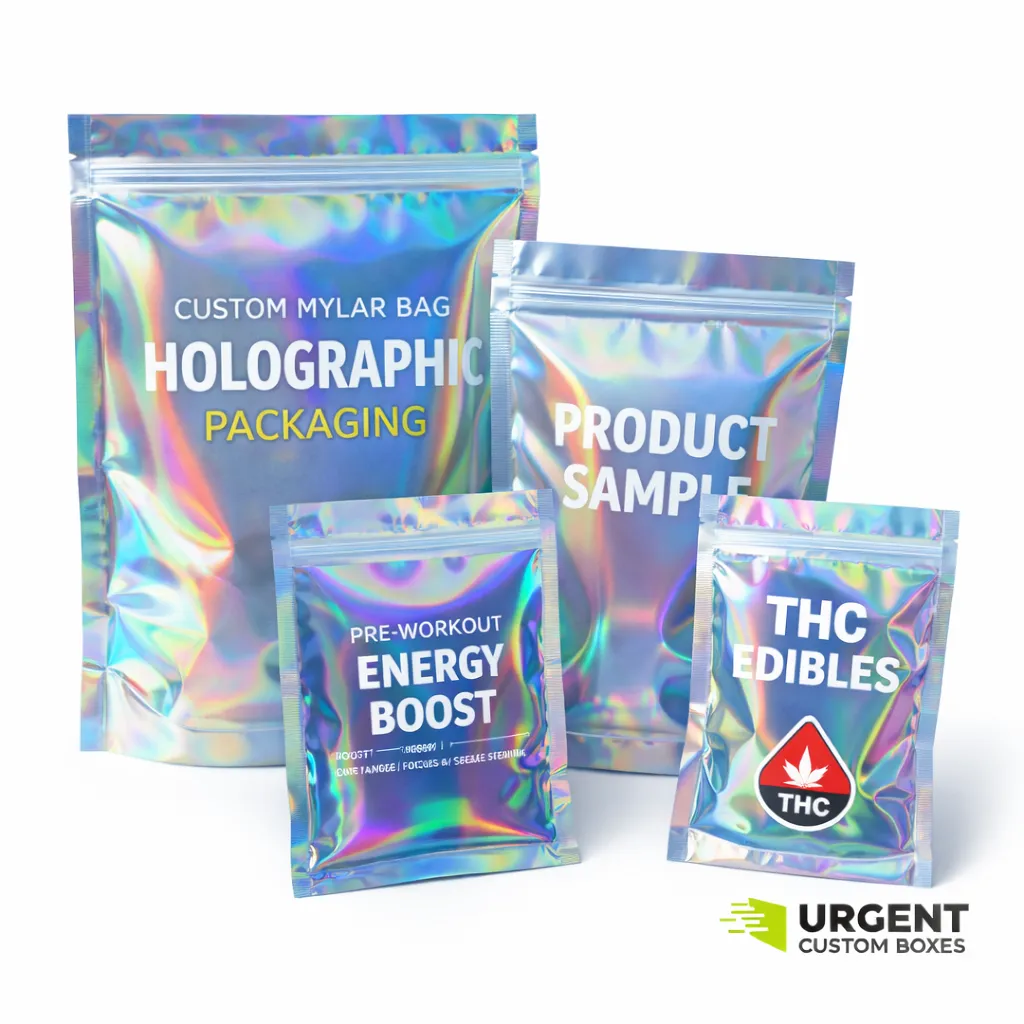
Understanding what this layer actually does, why it outperforms every alternative barrier material, and what happens when it is specified incorrectly – that is what separates brands that consistently deliver fresh, potent, shelf-stable product from brands that start getting quality complaints six weeks after a shipment goes out.
What the Aluminum Foil Layer Actually Is
The aluminum foil layer in a Mylar bag is not aluminum foil in the kitchen sense. It is a precision-rolled, ultra-thin sheet of aluminum laminated under controlled conditions between the PET outer film and the PE inner film bonded into a unified structure that behaves as a single high-performance barrier material.
What makes aluminum uniquely effective as a packaging barrier is its molecular density. Unlike polymer films which slow down transmission of oxygen, moisture, and light but cannot stop it entirely aluminum foil physically blocks transmission at the molecular level. There is no permeation path through a properly laminated, pinhole-free aluminum layer. That is what packaging engineers mean when they call it a near-perfect barrier. Not marketing language. Physics.
The critical distinction brand owners need to understand is the difference between true aluminum foil laminate and metalized film. Metalized PET or metalized BOPP has a vacuum-deposited aluminum coating — a layer so thin it is measured in nanometers. It gives bags a silver appearance and improves barrier performance over uncoated film, but it does not deliver the same oxygen, moisture, or light blockage as actual aluminum foil. If your product has real shelf life requirements, true aluminum foil laminate is not optional.
Four Things the Aluminum Core Blocks Completely
Oxygen. Oxidation is the primary cause of rancidity in food products, potency degradation in cannabis, and active ingredient breakdown in supplements. The aluminum barrier stops oxygen transmission before it reaches your product not slows it, stops it. That is a fundamentally different level of protection than any polymer barrier film delivers alone.
Moisture. Humidity destroys powder-based products, makes snacks go stale, causes clumping in protein blends, and degrades cannabis flower texture and smokability. The aluminum layer blocks moisture movement in both directions preventing ambient humidity from entering the bag and preventing your product’s own moisture content from migrating outward and destabilizing the seal.
UV and visible light. Light degrades cannabinoids, oxidizes coffee oils, breaks down photosensitive supplement actives, and fades natural color in food products. An opaque aluminum barrier blocks one hundred percent of light transmission. Your product sits in complete darkness from the moment the bag is sealed until your customer opens it regardless of how it is stored or displayed.
Odor. For cannabis, coffee, spices, pet treats, and any product with a strong aromatic profile, the aluminum layer prevents smell migration in both directions. Odor cannot escape outward through a properly constructed aluminum barrier bag — which matters for retail display, DTC shipping, and in many cannabis markets, regulatory compliance
Aluminum Barrier Performance Across Product Categories
Cannabis brands depend on aluminum barrier construction for terpene preservation, cannabinoid stability, and the opacity that most state cannabis packaging regulations require. The aluminum layer is doing compliance work and product protection work simultaneously.
Coffee brands need aluminum barrier performance to protect volatile aromatic compounds from oxidation and light degradation between roast and brew. Combined with a one-way degassing valve on the outer structure, aluminum barrier construction is what keeps specialty coffee tasting like specialty coffee at the point of opening.
Food and snack brands rely on the moisture and oxygen barrier to extend retail shelf life without reformulating product or adding preservatives. The bag does the preservation work the recipe stays unchanged.
Supplement and powder brands face hygroscopic product challenges that demand true aluminum barrier performance. Protein powders, greens blends, and pre-workout formulas absorb ambient humidity aggressively. Even minor moisture infiltration causes clumping, caking, and degraded mixability that generates negative reviews. Heavy-gauge aluminum barrier construction is the specification standard for this category.
How Urgent Custom Boxes Specifies the Aluminum Barrier Layer
Foil gauge, lamination bond quality, and seal integrity are the three variables that determine whether an aluminum barrier bag actually performs the way the specification claims it does.
At Urgent Custom Boxes, we match foil grade to your product category, your target shelf life, and your distribution environment not to the lowest cost option available in our supply chain. Every bag goes through lamination quality and seal integrity checks before production runs are released. A barrier specification that looks correct on paper but has lamination voids or pinhole defects delivers no real protection to your product.
Tell us your product, your fill weight, your shelf life target, and where your bags are going after they leave your facility. We will specify the right aluminum barrier construction from the inside out – and get you to a proof before anything goes to production.