

PE Layer
PE Layer in Custom Mylar Bags – The Inner Film That Seals Your Product and Protects What Is Inside
Most of the conversation around Mylar bag construction focuses on the outside. The print surface. Finish. The barrier layer. Those things matter but there is a layer on the inside of every bag that doesn’t work and nobody talks about nearly enough.
The PE layer. Polyethylene inner film. The surface that touches your product directly creates the heat seal that locks everything in, and determines whether all the barrier protection the aluminum layer provides actually stays intact from the moment the bag is filled to the moment your customer opens it.
Get this layer wrong – wrong grade, wrong seal temperature, wrong thickness – and none of the other layers matter. The barrier fails at the seal line. Product freshness degrades. Customers notice it before you do.
What the PE Layer Is and Where It Sits
Polyethylene is a thermoplastic polymer a material that softens when heat is applied and re-solidifies when it cools. That property is exactly why it works as the inner film in a Mylar bag. When your filled bag runs through a heat sealer, the PE layer melts at the seam, fuses to itself, and creates an airtight bond that physically locks everything the aluminum barrier is protecting.
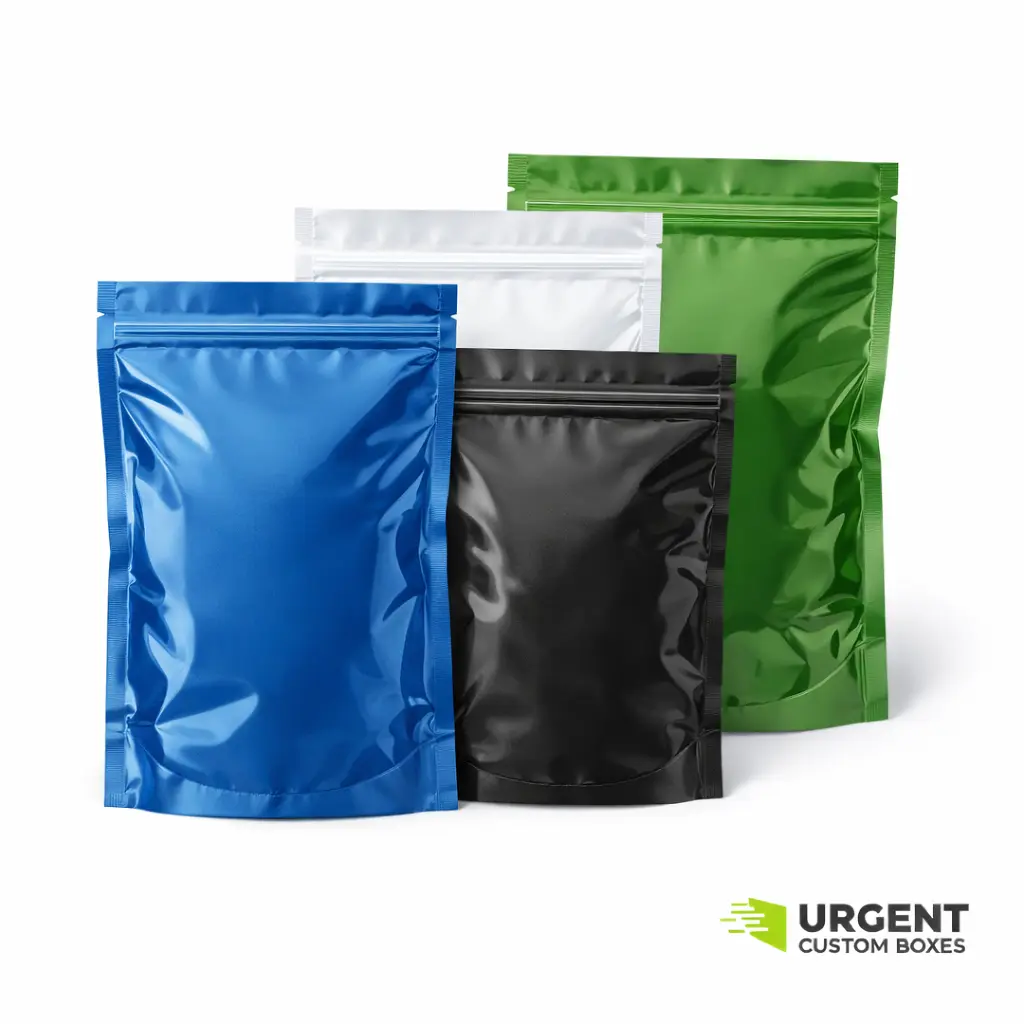
In the three-layer Mylar structure, the PE inner film sits closest to your product. The PET outer shell faces your customer. The aluminum foil core sits in the middle blocking oxygen, moisture, light, and odors. The PE layer sits on the inside of the food-safe, heat-sealable surface that contacts your product directly and closes the system after filling.
There are several polyethylene variants used in flexible packaging. Low-density polyethylene LDPE is the most common inner film choice for Mylar bag applications. It seals at lower temperatures than other options, which gives brand owners more flexibility in seal equipment and reduces the risk of burning or distorting the outer film during the sealing process. Linear low-density polyethylene LLDPE offers improved puncture resistance and seal strength at comparable gauges, and is often specified for heavier fill weights or products with sharp edges that put stress on the seal line.
Two Jobs the PE Layer Does - and Why Both Have to Work
Food-safe product contact: The PE inner film is the only layer in the Mylar structure that touches your product directly. That means it carries the full weight of food contact compliance. FDA-compliant polyethylene grades do not react with food supplements, cannabis, or cosmetic formulations – they do not leach chemicals, do not affect flavor or aroma, and do not alter the physical properties of what is inside the bag.
This is not a minor specification point. If you are selling a food product, a supplement, or a cannabis edible, the inner film of your packaging is a regulatory surface. The compliance of that surface is as important as the compliance language on your labels. At Urgent Custom Boxes, FDA-compliant PE grades are standard across every food, supplement, and cannabis Mylar bag in our range not an upgrade option.
Heat-seal bond creation: The second job the PE layer does is create the airtight closure that makes the bag functional. Three variables determine whether that seal actually holds: temperature, pressure, and dwell time. Too low on temperature and the PE does not fully melt — the seal looks closed but has micro-gaps that allow oxygen and moisture infiltration over time. Too high and the film burns, creating a brittle seal that fails under the physical stress of shipping and handling.
A proper PE heat seal is uniform across the full width of the seam, with no voids, no burn marks, and no product contamination in the seal zone. Contamination at the seal line — product residue, powder, or oil – is one of the most common causes of seal failure in supplement and food packaging. It prevents the PE from bonding cleanly to itself, leaving a path for air and moisture to enter the bag regardless of how well the aluminum barrier performs everywhere else.
PE Layer Performance Across Product Categories
Cannabis brands need a PE inner film that is fully inert to cannabinoids and terpenes – a surface that does not absorb aromatic compounds or alter the sensory profile of the flower or concentrate inside the bag. LDPE meets this requirement consistently across legal cannabis market specifications.
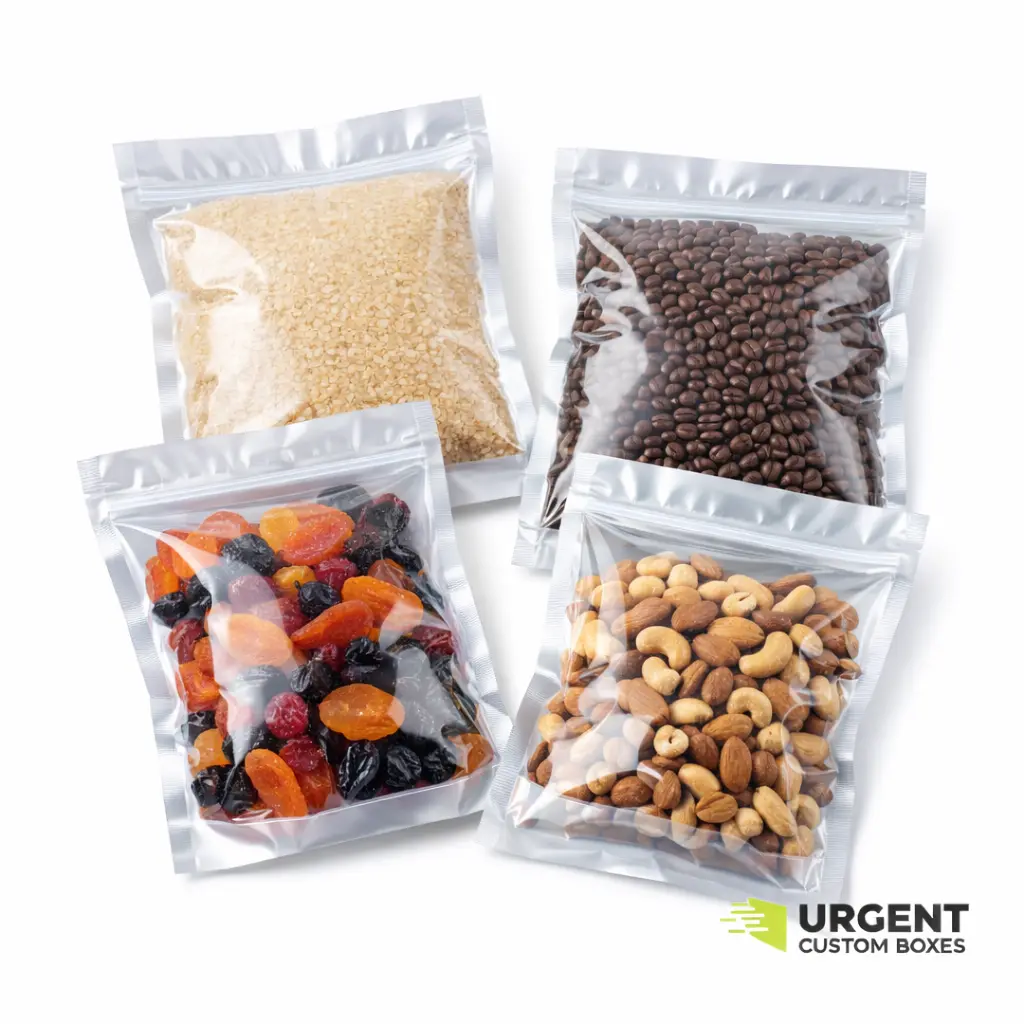
Food and snack brands depend on the PE seal to lock in moisture at the seam level – because a strong aluminum barrier with a weak PE seal still produces a stale product. The seal is the last line of the barrier system, and it has to close without gaps every single time.
Coffee brands running degassing valve integration need PE inner film that seals consistently around the valve housing – a point in the bag structure where seal integrity is most often compromised by poor lamination or incorrect seal equipment calibration.
Supplement and powder brands face the most demanding PE seal requirements of any category. Hygroscopic powders – protein blends, green formulas, and pre-workouts – pull ambient moisture aggressively through any gap in the seal line. Heavy-gauge PE with confirmed seal strength testing is the minimum specification for this product type.
Cosmetic and beauty brands need PE grades confirmed compatible with their specific formulation chemistry – particularly for oil-based, solvent-containing, or high-fragrance products where chemical interaction between the inner film and the formulation is a real risk.
How Urgent Custom Boxes Specifies the PE Inner Layer
PE grade selection, seal temperature calibration, and seal integrity testing are three things that happen before any Mylar bag order leaves our production facility – not after a brand owner reports a freshness complaint.
We will match PE grade to your product category, your fill process, and your sealing equipment. If you are running a manual heat sealer at low volume, your PE specification looks different from a brand running a continuous band sealer at high-speed fill rates. Both need a seal that holds – the path to that seal is different for each.
Tell us about your product, your fill process, and your seal equipment setup. We will match the right PE inner film grade to your specific application and confirm FDA compliance before production begins.