

BOPP Film for Custom Mylar Bags
The High-Clarity Surface Layer Built for Retail Performance
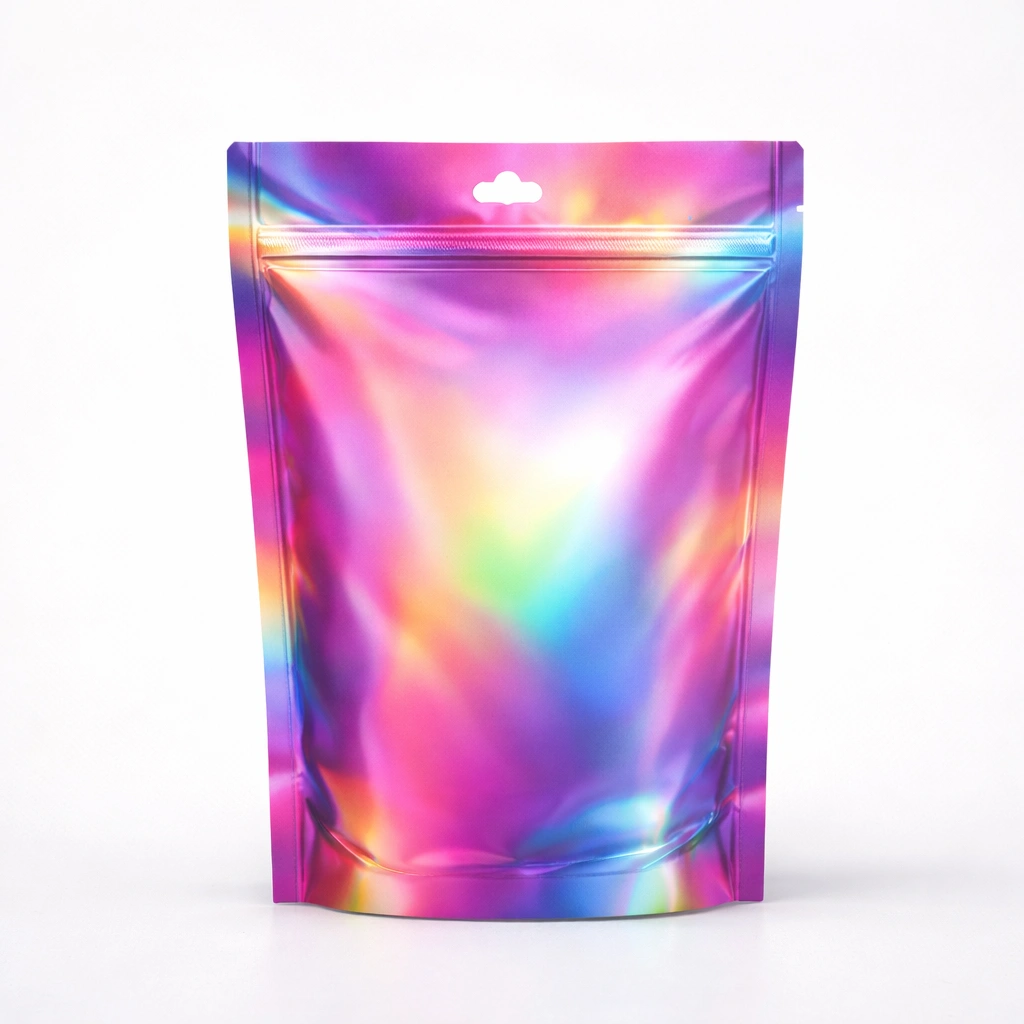
Walk into any grocery store, dispensary, or supplement retailer and look at the flexible packaging on the shelf. The bags that catch your eye first the ones with that sharp, bright, almost wet-looking surface that makes colors pop under retail lighting – are almost certainly running a BOPP outer film.
Biaxially oriented polypropylene is not a premium upgrade or a specialty option. It is one of the most widely used surface films in retail flexible packaging, and for good reason. It delivers optical clarity, strong ink adhesion, and moisture resistance on the outer surface at a unit cost that makes commercial sense across a wide range of product categories and order volumes.
But BOPP is not the right outer film for every Mylar bag application. Knowing when it serves your brand and when it works against you is the kind of specification decision that separates packaging that performs from packaging that looks fine in a sample and causes problems at scale.
What BOPP Film Is and How It Is Made
Polypropylene in its base form is a useful but unremarkable plastic film. What transforms it into a high-performance packaging surface is the biaxial orientation process – the same manufacturing approach used to produce PET film, applied to polypropylene instead.
During production, the film gets stretched in two directions simultaneously – machine direction and transverse direction. That stretching process realigns the polymer chains within the film, which improves tensile strength, increases surface clarity, reduces haze, and creates a more uniform surface for ink adhesion.
The result is a film that looks and performs dramatically better than standard cast polypropylene. The surface that comes off that process is bright, smooth, and naturally moisture-resistant on the exterior – which is why BOPP became the default outer film for snack packaging, confectionery, and retail food pouches long before the custom Mylar bag market existed in its current form.
What BOPP Does for Your Packaging
Optical clarity and gloss: BOPP produces one of the brightest, highest-clarity surfaces available in flexible packaging. Under retail lighting, a gloss BOPP outer film intensifies printed colors in a way that draws attention from across an aisle. For brands whose visual identity is bold, energetic, and built around strong color contrast, this is a significant commercial advantage at the point of sale.
Ink adhesion and print fidelity: BOPP accepts CMYK printing with strong color saturation and clean edge definition when the surface has been properly Corona-treated before printing. Corona treatment raises the surface energy of the film, which allows ink to bond rather than bead. Without it, ink adhesion fails — not immediately, but over time, through handling and transit friction. Any serious supplier confirms corona treatment as part of the production standard, not as an add-on.
Moisture resistance on the outer surface: The BOPP surface naturally resists moisture on the exterior of the bag — which protects your printed graphics from humidity exposure during storage and distribution. This is different from the moisture barrier the aluminum foil layer provides on the inside. BOPP handles exterior moisture. Aluminum handles product-side moisture. Both matter, and they work together.
Lightweight flexibility: BOPP is lighter and more flexible than PET film at comparable gauges. For DTC brands where shipping weight affects unit economics, and for products where bag flexibility during consumer use matters, this is a practical advantage worth factoring into your specifications.
BOPP vs PET - Choosing the Right Outer Film
This is the decision most brand owners do not realize they are making when they order custom Mylar bags. BOPP delivers superior optical clarity and gloss performance If your brand relies on maximum color vibrancy and retail shelf impact, BOPP is the stronger surface film for that purpose.
PET delivers superior tensile strength and puncture resistance. For heavy fill weights, sharp-edge products, or bags that go through demanding distribution environments, PET holds up better under physical stress.
On print performance, both films handle CMYK and Pantone reproduction well when properly treated. The difference shows up in finish options. Soft-touch laminate bonds and performs more consistently over PET than BOPP in most production environments. If soft-touch is part of your brand specifications, PET is the more reliable base.
On cost, BOPP typically comes in lower per unit than PET at comparable gauges. For brands where unit economics are tight and the product does not require PET-level structural strength, BOPP is a commercially sensible choice not a compromise.
BOPP Film Across Product Categories
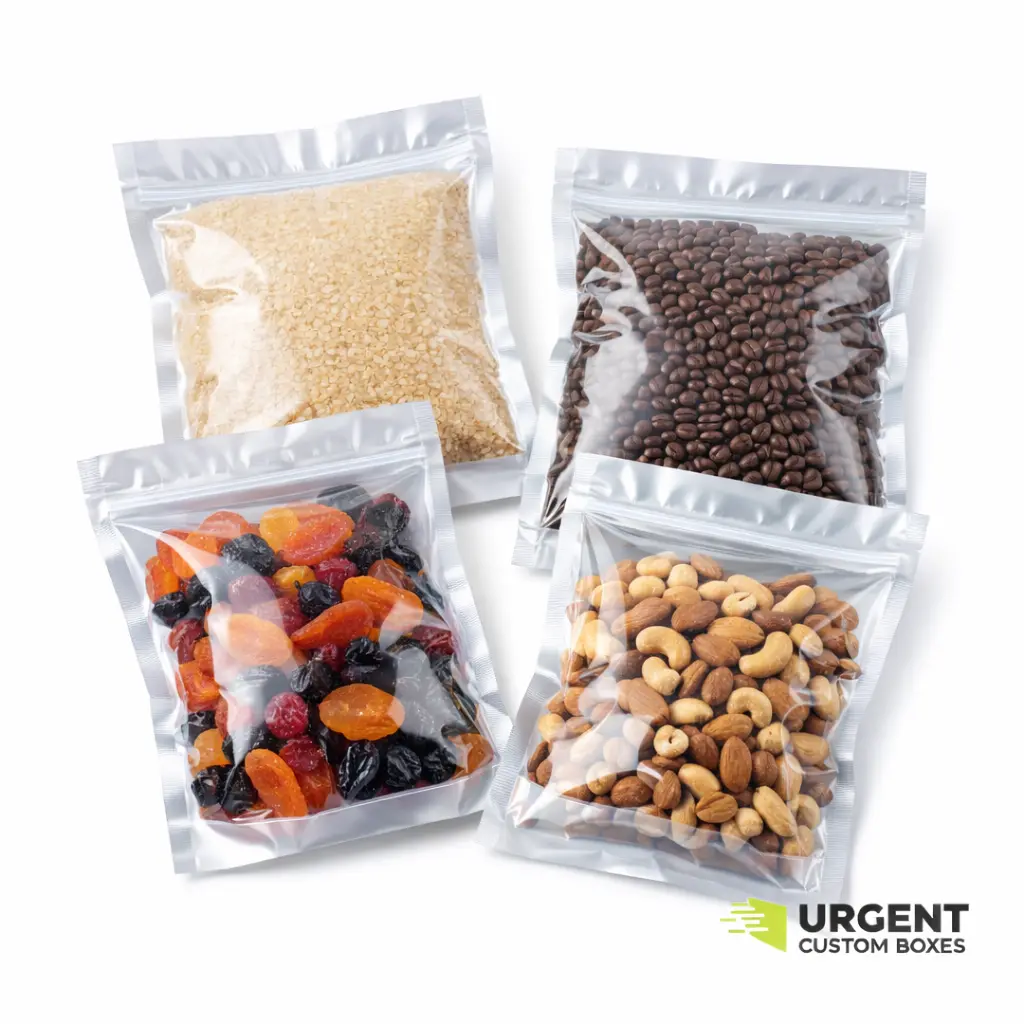
Snack and food brands use gloss BOPP to drive impulse purchase decisions in high-competition retail environments. Surface brightness at retail is a genuine sales tool in this category.
Coffee brands run BOPP outer films successfully when degassing valve integration is handled correctly and the distribution environment does not expose bags to temperature extremes that stress the film structure.
Supplement brands moving their product through DTC channels benefit from BOPP’s lighter weight and flexibility – both reducing shipping costs and improving the consumer experience when opening and resealing the bag.
Cosmetic and beauty brands use pearlized BOPP – a specialty variant with a subtle iridescent quality – for shelf presence that reads as premium without the cost of metallic foil laminate construction.
How Urgent Custom Boxes Specifies BOPP Film
The decision between BOPP and PET as your outer film is not made by looking at a price list. It is made by looking at your product, your fill weight, your distribution model, your finish requirements, and what your brand needs to communicate at the moment of first contact.
At Urgent Custom Boxes, we walk through that specification with you before anything goes into production. Corona treatment confirmation, ink adhesion standards, laminate compatibility, and print registration checks are all part of our production process on every BOPP Mylar bag order not optional quality steps.
Tell us about your product category, your target shelf environment, and your brand positioning. We will tell you whether BOPP is the right outer film for your bag – and if it is not, exactly why, and what we recommend instead.