


Quick Answer
No – you cannot safely use wax paper in the oven. Its paraffin wax coating begins to melt around 200°F (93°C), which is far below typical baking temperatures of 325–425°F. At oven heat, the wax melts onto your food, the bare paper smokes, and it can catch fire. The right tool for the oven is parchment paper, which uses a heat-resistant silicone coating rated up to 450°F.
You’re mid-recipe, oven preheating to 350°F, and you just realized the roll of paper in your hand might be the wrong one. Can you use wax paper in the oven? The answer is a firm no — and understanding why takes about two minutes of reading. This guide covers exactly what wax paper is made of, what happens when it meets oven heat, the one narrow exception that exists, and which alternatives to grab instead.
What Is Wax Paper? (And Why Heat Is a Problem)
Wax paper – also called paraffin paper or waxed paper – is a standard sheet of paper coated on either one or both sides with paraffin wax. That coating gives it useful properties at room temperature: it’s non-stick, moisture-resistant, and easy to work with. It’s an excellent tool for cold food prep tasks:
- Rolling out dough on a clean surface
- Wrapping sandwiches, cheese, and deli meats
- Separating burger patties and baked goods in the freezer
- Sifting dry ingredients — the smooth surface creates a clean funnel
- Lining shelves and drawers for easy cleanup
The problem is its melting point. Paraffin wax begins to liquefy at approximately 99–200°F (37–93°C), depending on the grade. Standard baking temperatures start at 325°F and often climb to 425°F or higher. That gap – between 200°F and 325°F – is the reason wax paper and ovens don’t mix.
What Actually Happens When Wax Paper Goes in the Oven
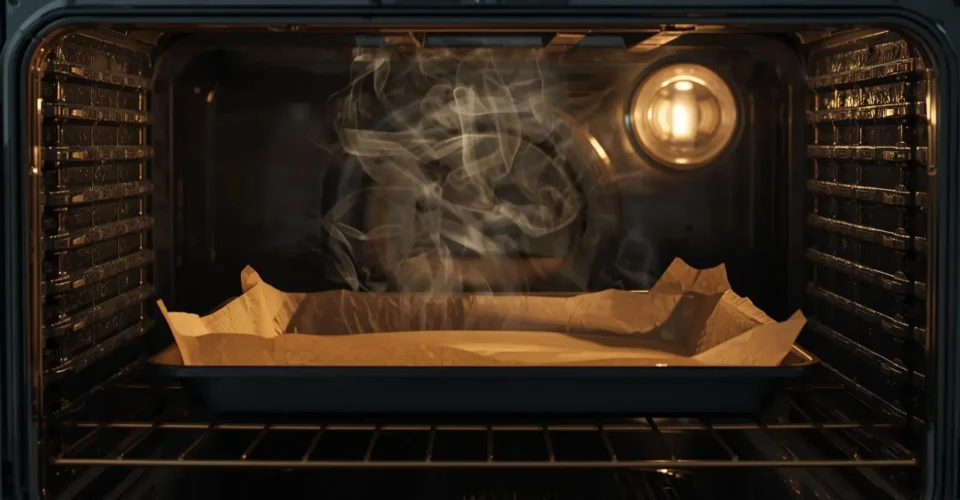
The wax doesn’t disappear – it melts, migrates, and leaves the underlying paper dangerously exposed. Here’s the exact sequence of events:
- The oven reaches baking temperature (325–425°F for most recipes).
- The paraffin wax coating liquefies at around 200°F.
- Liquid wax soaks into your food and the surface of the pan.
- The now-uncoated paper is exposed to direct oven heat and begins to smoke.
- At sustained high temperatures, the paper can char or ignite — a genuine fire risk.
Even in the best-case scenario where the paper doesn’t catch fire, the melted wax contaminates your baked goods and coats the pan with a residue that’s frustrating to clean. There is no outcome here that ends well.
The One Narrow Exception: When Wax Paper Can Line a Pan
Important limitation
This exception applies only in a very specific, limited circumstance. Do not generalize it to other baking scenarios.
According to Reynolds – one of the largest manufacturers of kitchen paper products – custom wax paper can be used as a pan liner when the batter or dough completely and fully covers every inch of the paper. The logic is: if a thick, moist batter acts as a heat buffer between the paper and oven air, the paper never reaches ignition temperature.
In practice, this means:
- Lining the bottom of a round cake pan where batter covers the entire paper surface – potentially acceptable.
- Lining a cookie sheet where the edges and gaps between cookies are exposed – not safe
- Any pan where batter doesn’t reach every edge of the paper – not safe
- Broiling, air fryer, or toaster oven use – never acceptable under any circumstance
Even with this exception, most professional bakers simply use parchment paper instead. There is no scenario where wax paper outperforms parchment in the oven. When in doubt – and you should be in doubt – use parchment.
Wax Paper vs. Parchment Paper: Side-by-Side Comparison
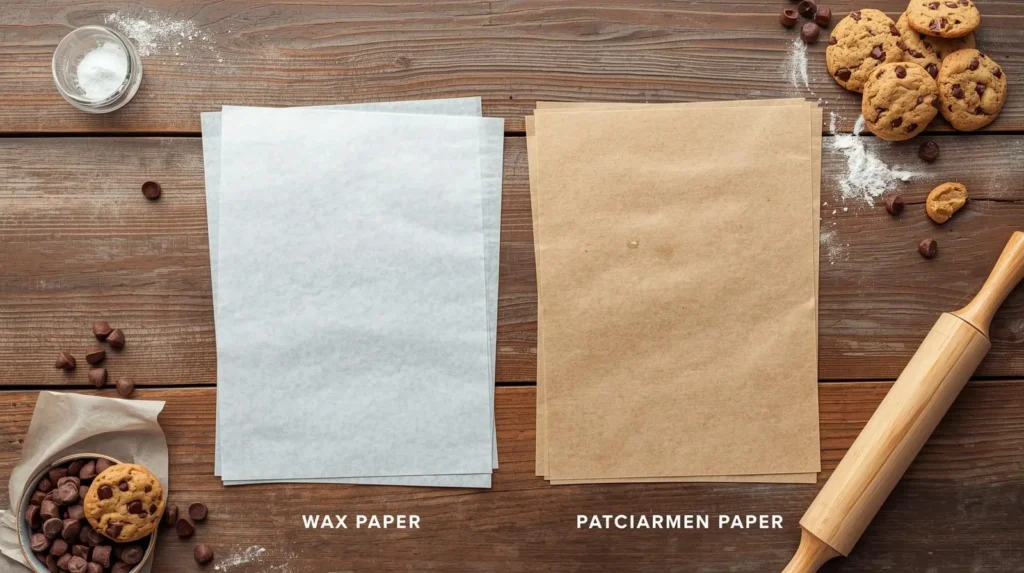
These two rolls look nearly identical in the drawer. Here’s precisely how they differ in composition and performance:
| Feature | Wax Paper | Parchment Paper |
|---|---|---|
| Coating | Paraffin wax | Food-grade silicone |
| Heat Resistance | ~200°F (93°C) before melting | 420–450°F (215–232°C) |
| Oven Safe? | ❌ No (except very low-heat situations) | ✅ Yes — safe for standard baking temperatures |
| Non-Stick | ✅ Yes — mainly at room temperature | ✅ Yes — works at all baking temperatures |
| Moisture Resistance | Excellent | Moderate |
| Freezer Safe | Excellent | Yes — performs well |
| Microwave Safe | Yes — for short use with low-fat foods* | Yes — generally microwave safe |
| Broiler Safe | ❌ Never | ❌ Never — heat too high |
| Best Use | Cold food prep, wrapping, storage, sifting ingredients | Baking, roasting, lining baking sheets |
| Cost | Lower — more economical | Slightly higher per roll |
*Wax paper can melt in the microwave when used with high-fat foods. Use only for covering foods, not as a base, and only in short bursts.
Safe Oven Alternatives to Wax Paper
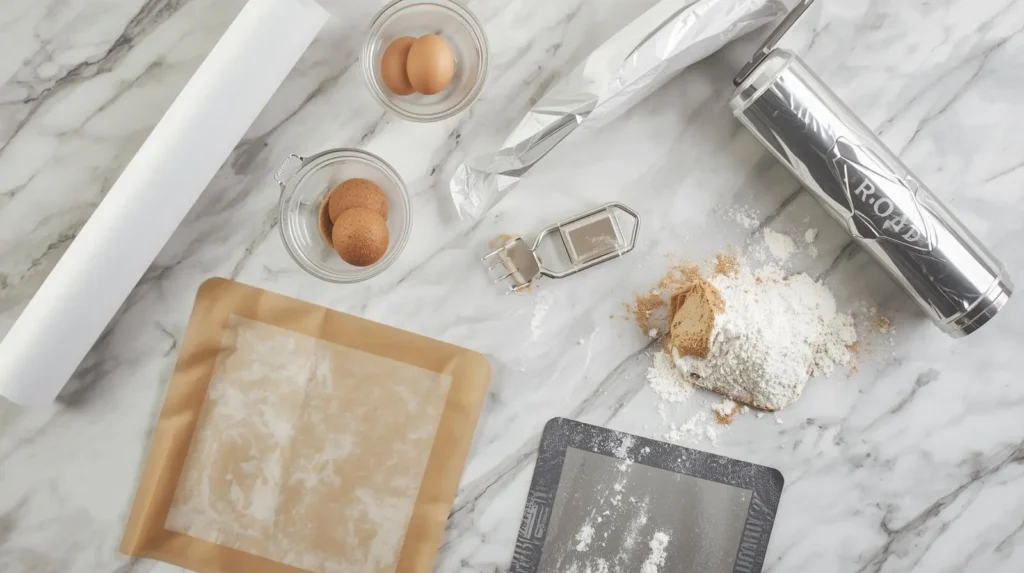
Out of custom parchment paper? Here are four oven-safe options to reach for instead:
Custom Parchment Paper
The gold standard. Silicone-coated, heat-safe to 420–450°F, non-stick at all temperatures. Available in pre-cut sheets or rolls. This is the correct tool for virtually all baking and roasting.
Aluminum Foil
Melting point of ~1,220°F — completely safe at any oven or broiler temperature. Use it to line sheet pans or wrap food. Lightly grease the foil before use with delicate foods like fish or cheese to prevent sticking.
Silicone Baking Mat
Reusable, non-stick, and heat-safe to around 480°F. Excellent for cookies, pastries, and roasting. A long-term investment that eliminates the need for any paper liner entirely.
Greased Pan (No Liner)
Often overlooked — for brownies, most cakes, and roasted vegetables, a well-greased and lightly floured pan is all you need. No liner required at all.
Common Baking Scenarios Answered Directly
Can you use wax paper in the oven for cookies?
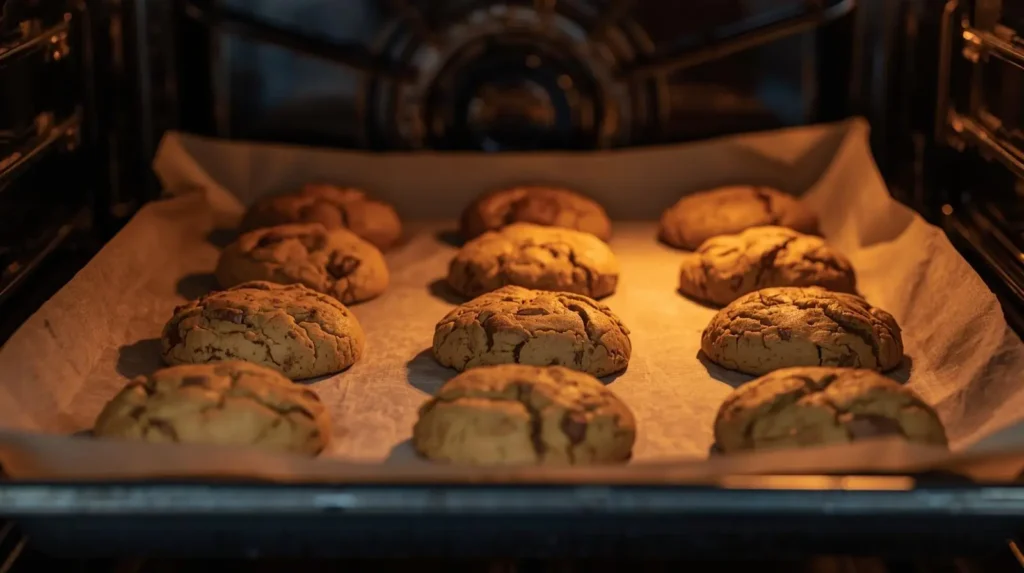
No. Cookie sheets have exposed paper edges and open gaps between each cookie, meaning the wax paper would be in direct contact with oven heat. It will melt, smoke, and ignite. Always use parchment paper or a silicone baking mat for cookies.
Can you use custom wax paper in the oven for a cake?
Only if the batter completely covers every part of the pan liner – no exposed edges, no gaps. Even so, our custom parchment paper eliminates this concern entirely and is the universally recommended choice. If the batter doesn’t reach the edges of the liner, those edges are a fire hazard.
Can you use wax paper in the oven at 350°F?
No. At 350°F you’re nearly double the melting point of paraffin wax (approximately 200°F). The wax will melt, smoke, and transfer to your food. Custom Parchment paper is rated for 420–450°F and handles 350°F with no issues — it’s the right tool for this temperature.
What should you do if you accidentally use wax paper in the oven?
Remove the pan from the oven immediately. If the wax has already melted onto your food, discard the food – melted paraffin wax is not safe to eat. Clean the pan with hot soapy water and an oven cleaner, and ventilate your kitchen. If the paper begins to char or you see flames, follow standard fire safety procedures.
Frequently Asked Questions
Can you use wax paper in the oven?
No. Wax paper cannot safely go in the oven. Its paraffin wax coating begins to melt at approximately 200°F (93°C) – far below the 325-425°F range used for standard baking. At those temperatures, the wax melts onto your food and the exposed paper smokes and can ignite. The only oven-safe liner paper is parchment paper, which is coated with heat-resistant silicone rated up to 450°F.
What happens if you accidentally put wax paper in the oven?
Remove from the pan immediately. If wax has melted onto your food, discard it – melted paraffin is not safe to consume. Clean the pan thoroughly with hot soapy water and an oven cleaner, and ventilate your kitchen to clear any smoke. If the paper is charred or caught on fire, follow the standard kitchen fire safety steps.
Can I substitute wax paper for parchment paper in the oven?
No — these two papers are not interchangeable for oven use.
Parchment paper is coated with silicone and is heat-safe up to 450°F.
Wax paper’s paraffin coating melts at around 200°F.
If you’re out of parchment, use aluminum foil or a well-greased pan instead.
Can you use wax paper in the oven for cookies?
No. The exposed paper edges and gaps between cookies mean the wax paper receives direct oven heat, which causes it to melt, smoke, and potentially ignite. For cookies, use parchment paper or a reusable silicone baking mat — both are non-stick and fully oven-safe.
Can you use wax paper in the oven at 350°F?
No. 350°F is nearly double the melting point of paraffin wax (~200°F). At that temperature, wax paper will melt, smoke, and contaminate your food. Parchment paper is stable up to approximately 450°F and handles 350°F without any issues – use parchment instead.
What is the difference between wax paper and parchment paper?
The coating is the difference. Wax paper is coated with paraffin wax – useful for cold food prep and storage, but not heat-resistant. Parchment paper is coated with food-grade silicone, which is non-stick at all temperatures including oven heat up to 450°F. The simple rule: wax paper is for cold, parchment paper is for heat.
The Bottom Line
Can you use wax paper in the oven? No — not for any standard baking or cooking task. The paraffin wax coating melts well below oven temperatures, creating a food safety risk, a cleaning headache, and a potential fire hazard. The narrow exception for fully covered pan liners exists, but it’s simply not worth the risk when parchment paper does the same job better, every time.
The rule is easy to remember: wax paper is for cold. Parchment paper is for heat.
Need Custom Food Packaging Paper for Your Business?
We manufacture FDA-compliant custom wax paper, parchment paper, and branded food packaging paper for bakeries, delis, and food service brands. Free USA shipping. No minimum order. 7–10 day turnaround.
Explore Custom Food Packaging Paper →