

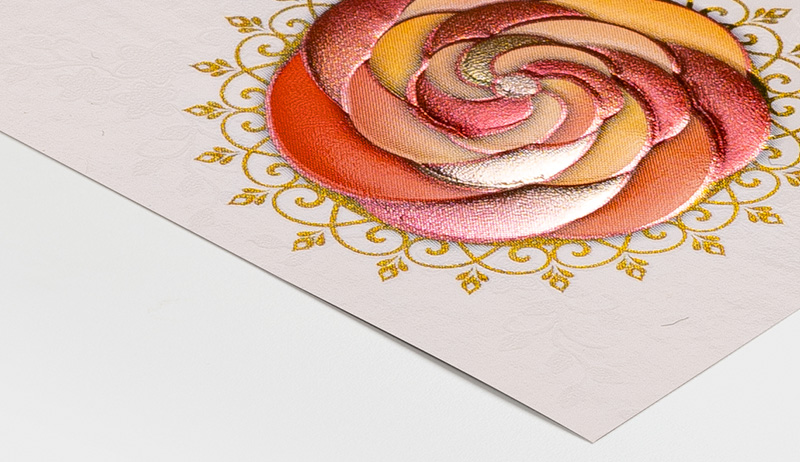
To understand embossing and debossing, you need to look at how packaging design and materials work together. A visually appealing box with prominent printing builds brand awareness. Embossing raises a design above the surface, so it has a textured, embroidered feel when you touch it instead of a smooth printed finish. Debossing works the opposite way: the design is pressed into the surface like a stamp, so the material sinks inward and everyone can feel its depth.
Detail Look at Embossing Printing
The embossing process is used by various industries to make their products stand out and give them a professional look. It is a high-end printing and design technique in which a brand name or product name is pressed into a material using two dies. The process creates a raised shape on the surface that can be felt and cannot be erased.
Dies for Embossing Text and Design
There are many types of embossing dies available, but when a specific design is needed, printing experts create a separate die for it, which is then pressed into the surface of a suitable material. Brass dies are used to highlight small text. Copper dies are used for large design textures. For irregular printing, steel dies are used on metal and plastic materials. Silicone dies give an embroidered look to textile and leather materials.
Embossing costs more than standard printed packaging, but it is one of the best ways to add visual appeal to a product, and the effect lasts for a long time.
Embossing Design Commonly Used For:
Business cards: embossing gives the logo and business name a raised, embroidered style, like the lettering on credit and debit cards.
Invitations: wedding and event management companies often use embossing to make a design or text stand out.
Packaging: embossing adds visual appeal and a tactile texture that elevates packaging style and design.
Book covers: embossing presents the book title in a refined way that readers can feel by touch, like an embroidered design.
Letterheads, envelopes and notepads: these industries often use embossing to present text.
Labels and tags: many products use embossed labels and tags for a professional look.
Arts and crafts: embossing looks like handcrafted art and is one of the most popular ways to add texture to craft designs.
Detail Look at Debossing Printing
The debossing process also depends on dies, which are metal plates carrying the chosen design elements. Debossing dies press a text or design element into the surface of a suitable material. The same kind of dies used for embossing are used here, but the text or shapes are pressed into the depth of the material instead of raised above it, so everyone can feel the recessed print.
Where to Use Debossing Printing
Debossing is widely used across industries. These are the main categories where debossing is often used:
Packaging: debossing gives packaging a rich look and creates strong visual impact on the shelf.
Covers: product and book covers are debossed so customers can feel the pressed text when they touch it.
Stationery: debossing adds a professional touch to business cards, invitations and company letterheads.
Luxury products: luxury brands deboss text and logos on their packaging to stand out from competitors.
Certificates and diplomas: debossed text highlights a person’s name or degree title within the document.
Combining foil stamping with debossing creates a striking finish for logos and key text.
Conclusion
Special dies are prepared for both debossing and embossing, and they apply a controlled amount of force to press text and elements into a refined shape on the material. These dies are made to each business’s order, with the company’s text or logo created on the die so the finished print matches its requirements. When the die is pressed onto the packaging material, the text and elements are formed as either embossing or debossing, depending on the customer’s preference.
Material selection matters for both techniques. Printing experts first advise on materials so the embossing or debossing can be applied correctly and the finished design meets the client’s requirements. These finishes are generally recommended on paper, leather, metal and cardboard, so consider the material first when preparing your packaging.
FAQs
What is the advantage of Embossing?
The main advantage of embossing is that you can feel the raised elements and text. The technique increases visual impact so your product stands out, and it promotes your brand name with a memorable tactile experience. The premium feel of an embossed element signals the high-quality materials of luxury products.
What is the advantage of Debossing?
Debossing presses text and elements into the material, which gives a professional, durable appearance. Its main advantage is that your text and graphics stay on the product for a long time and cannot be removed.
Which Material is ideal for Embossing Text?
For embossed text, the most suitable materials are specialty paper, cardboard, leather and fabric, which are common in packaging, including textile and shipping products.
Is Embossing and Debossing Permanent Solution?
Yes. Both finishes are permanent and last until the packaging itself is damaged. This is also why embossing and debossing cost more than regular packaging printing: the dies are made specifically for each job.