


 1 / 4
Custom Glassine Paper (Printed Glassine Sheets)
Custom printed glassine paper sheets for bakery box liners, chocolate and candy inserts, cookie dividers and acid-free interleaving. Translucent, grease resistant and plastic free, printed in 1 or 2 spot colors and cut to your box size.
- Digital proof before production
- Free design support
- CMYK or Pantone colors
- Ships to all 50 states
Custom glassine paper is a smooth, glossy, translucent paper printed with your logo and cut to size for packaging. It is made by pressing dense wood pulp through heavy supercalender rollers until the sheet becomes almost glass-like, which is where the name comes from. Urgent Custom Boxes supplies glassine sheets for bakery box liners, chocolate and candy inserts, cookie dividers, and protective interleaving in gift and retail boxes.
Glassine paper resists grease, air and moisture without any wax or plastic coating. Its strength comes from density, not from a chemical layer. It is translucent enough to show the product underneath, strong for its weight, acid-free, and fully recyclable with household paper when uncoated.
We print glassine sheets in one or two spot colors and cut them to your box size, in standard or custom formats. Standard orders arrive in 6 to 8 business days after proof approval, rush orders take 4 to 6 business days, and shipping is free to all 50 states.
What Makes Glassine Different
Most grease-resistant papers rely on a coating. Wax paper uses paraffin, and parchment uses silicone. Glassine gets its barrier from how it is made.
- Pulp preparation. Hardwood pulp from trees such as birch and aspen is cleaned of lignin, the natural binder that makes ordinary paper brittle and yellow with age.
- Refining. The fibers are beaten until they swell and bond tightly, which removes most of the tiny air gaps found in standard paper.
- Forming and drying. The pulp is formed into a sheet and dried.
- Supercalendering. The sheet passes through a stack of heavy, polished rollers under pressure. This crushes the fibers flat, closes the surface, and creates the gloss and translucency glassine is known for.
The result is a thin sheet that blocks grease and air, holds up to folding, and stays recyclable because nothing has been added to it.
What Is Glassine Paper Used For in Packaging?
Glassine paper is used to line and protect products inside boxes. The most common uses are bakery box liners, chocolate and candy box inserts, cookie and macaron dividers, and acid-free interleaving that keeps cosmetics, jewelry, art prints and other surfaces clean during shipping.
| Use | What glassine does | Box it goes in |
|---|---|---|
| Bakery box liners | Keeps butter and glaze off the board, shows the pastry | Custom bakery boxes |
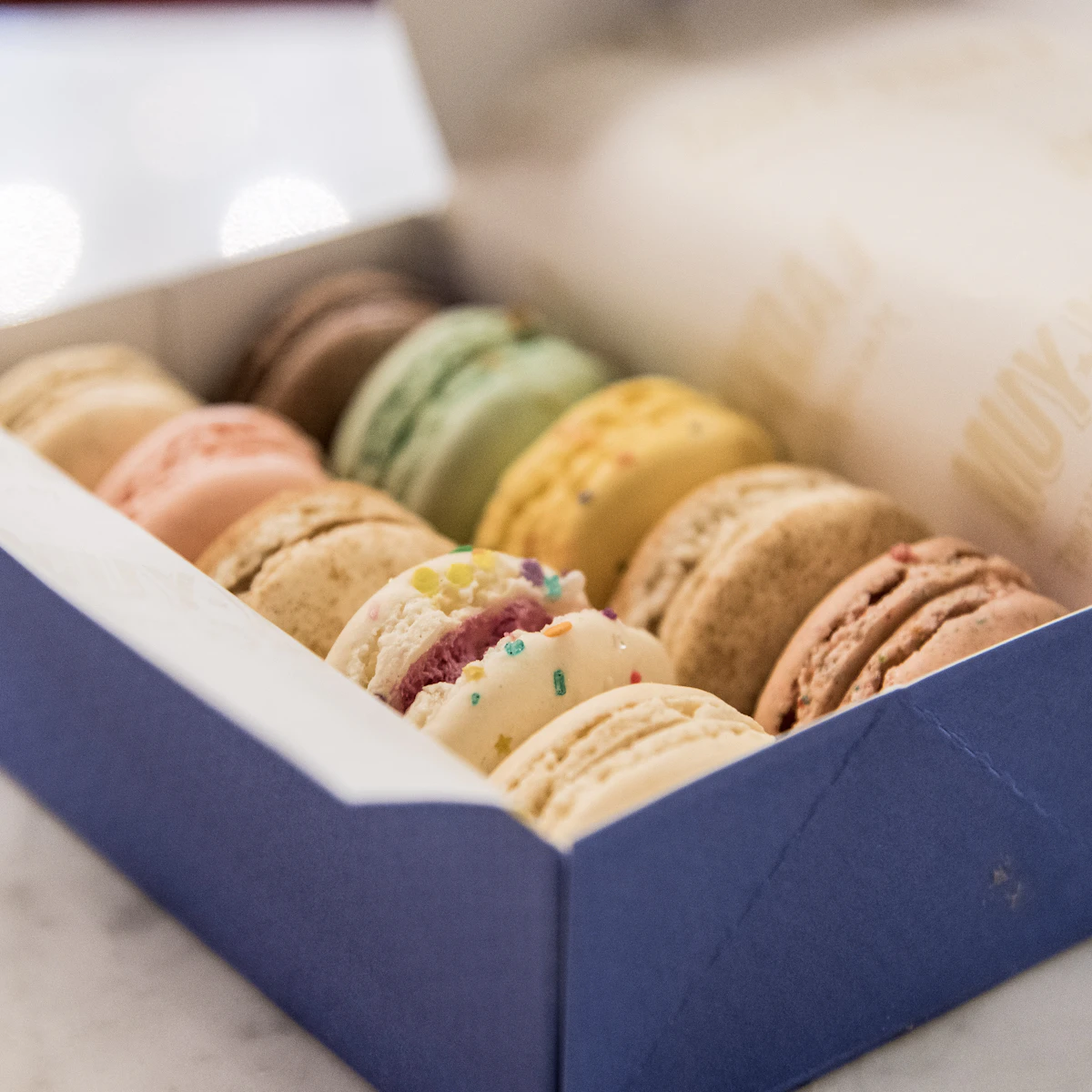
| Cookie and macaron dividers | Separates layers so items don’t stick or scuff | Cookie boxes, macaron boxes |
| Chocolate and candy inserts | Absorbs no oil, keeps truffles clean and glossy | Chocolate gift packaging, candy boxes |
| Food barrier in gift boxes | Sits between treats and crinkle paper or tissue | Custom gift boxes |
| Cosmetic and jewelry interleaving | Protects polished surfaces from scratches and dust | Cosmetic boxes, rigid boxes |
| Art print and stationery interleaving | Acid-free layer that won’t transfer or yellow | Custom mailer boxes |
Bakery and Confectionery
Croissants, Danish and glazed donuts leave grease marks on bare paperboard within minutes. A glassine liner keeps the box clean and lets the customer see the pastry through the paper when the lid opens. In chocolate boxes, a glassine sheet over the top layer keeps truffles from rubbing against the lid and protects the shine of tempered chocolate.
Retail and Gift Boxes
Glassine is a plastic-free replacement for the clear film many brands still use to wrap small items. A printed glassine sheet folded over candles, soaps, jewelry or skincare adds a translucent reveal layer before the product itself.
How Is Glassine Different from Parchment, Wax and Greaseproof Paper?
Glassine is uncoated and translucent, and it gets its grease resistance from density. Parchment is silicone coated and oven safe. Wax paper relies on a paraffin coating and can’t take heat. Greaseproof paper is a refined, low-porosity food wrap. Glassine is the denser, glossier, more see-through version of that same family.
| Paper | How it resists grease | See-through | Oven safe | Recyclable | Best job |
|---|---|---|---|---|---|
| Glassine | Density from supercalendering | Yes | No | Yes, when uncoated | Liners, inserts, interleaving |
| Greaseproof | Refined low-porosity fiber | Partly | Partly | Yes | Burger and fry wraps |
| Parchment | Silicone coating | Partly | Yes | Limited | Baking and pan liners |
| Wax paper | Paraffin or soy wax coating | Partly | No | Limited | Cold wraps and storage |
| Vellum | Not grease resistant | Yes | No | Yes | Invitations, overlays |
Choose glassine when appearance matters as much as protection: when the customer should see the product through the paper, when the sheet sits inside a gift or retail box, or when surfaces need acid-free contact. For hot, greasy food handed over a counter, greaseproof paper is the better fit. For anything going into an oven, use parchment.
Designing for a Translucent Sheet
Printing on glassine works differently from printing on opaque paper, and good designs use that difference instead of fighting it.
Your print reads from both sides
Light passes through the sheet, so a logo shows in reverse from the back. Simple marks and patterns work better than text-heavy layouts.
Light coverage prints cleanest
Glassine’s smooth, closed surface holds less ink than ordinary paper. One or two spot colors with open space between marks give sharp, even results.
The product becomes the design
A scattered logo pattern lets a pastry or truffle show through the gaps, so the sheet frames the product rather than hiding it.
Placement matters on liners
Keep your logo in the area that stays visible after folding or tucking.
We print glassine with soy-based or water-based inks suitable for packaging that sits near food, and match brand colors to your Pantone codes. Free design support and unlimited proof revisions come with every order.
Sheet Sizes and Liner Sizing
Glassine liners should be cut to the inside of the box, not the outside. Measure the box interior, then decide how the sheet will sit.
| How the sheet sits | Cut size |
|---|---|
| Flat liner on the box floor | Inside length x inside width |
| Liner that folds up the walls | Inside length and width plus twice the wall height |
| Wrap-over sheet for the top layer | Inside length and width plus 1 to 2 in overhang each side |
| Divider between layers | Inside length x inside width, minus 1/8 in |
Formats: flat cut sheets, rolls for wrapping stations, and die-cut circles or shapes for cake boards and round tins. Weights: lighter glassine is more translucent and heavier glassine is stiffer. Most packaging liners use weights in the 40 to 60 gsm range.
Send your box style and inside dimensions with your quote, and we cut the glassine to fit. If you’re ordering boxes from us at the same time, we size the liners from the box dieline.
Is Glassine Paper Recyclable?
Yes. Plain, uncoated glassine is 100% paper and goes in household paper recycling. It is also compostable. Waxed or laminated glassine is a different product and isn’t accepted in paper recycling, so check which type you’re buying.
Plain vs Coated Glassine
Some glassine is waxed, lacquered or laminated to make it fully moisture proof. Those coatings add protection for wet or long-storage products, but they remove recyclability. Our standard glassine sheets are plain and uncoated, so your customers can recycle the liner with their other household paper.
Plastic Free, with an Honest Caveat
Glassine is one of the simplest ways to remove clear plastic film from your packaging. It contains no plastic, wax or fluorinated grease-proofing chemicals. One honest caveat: glassine is made from virgin wood pulp, not recycled fiber, because the refining process needs long, clean fibers. The pulp comes from renewable, managed forests, and the finished sheet recycles back into the paper stream.
Pricing and Order Details
| 1 or 2 spot colors | |
| Production | 6 to 8 business days, rush 4 to 6 |
| Shipping | Free to all 50 states |
| Quote | Under 24 hours |
| Price match | We price below any lower written quote for the same specs |
Glassine is priced per 1,000 sheets by sheet size and print colors, and larger runs lower the price per sheet. Custom die-cut shapes are quoted to shape. Approved artwork stays on file, so reorders go straight to production. Get your price in under 24 hours.
Custom Glassine Paper FAQs
Can glassine paper go in the oven or microwave?
No. Glassine isn’t heat resistant. Use it for packaging, lining and storage. For baking, use parchment paper.
Does glassine paper yellow over time?
High-quality glassine has the lignin removed during pulping, which is why it is acid-free and resists yellowing. That is also why it’s used to store photographs and artwork.
Do you offer colored glassine?
Ask on your quote. Glassine can be dyed during manufacturing, and colored sheets work well for confectionery and seasonal packaging.
What is the difference between glassine and vellum?
Both are translucent, but vellum is softer and tears more easily, and it isn’t grease resistant. Glassine is denser and stronger, and it holds back butter and oils.
Do you make glassine bags as well as sheets?
Yes. For ready-made bags and envelopes, see our custom glassine bags.
Can I order samples before a full run?
Yes. Request samples on your quote to check translucency, weight and fit inside your box before production.
Get Your Custom Glassine Paper Quoted
Send your size, quantity and logo. Our design team returns a digital proof before production.