Description
What are large Mylar bags?
Large Mylar bags are oversized high-barrier pouches designed for bulk or high-volume products. They use laminated films, strong seals, and optional gussets so you can pack, store, and ship much larger quantities than standard pouches while keeping oxygen, moisture, light, and handling under control.
These bags can act as primary packaging for big consumer units or secondary liners inside boxes, buckets, or cartons. You control width, height, gusset depth, thickness, finish, and closure, so the same “large bag” concept can serve multiple product types and channels.
Which products fit best in large Mylar bags?
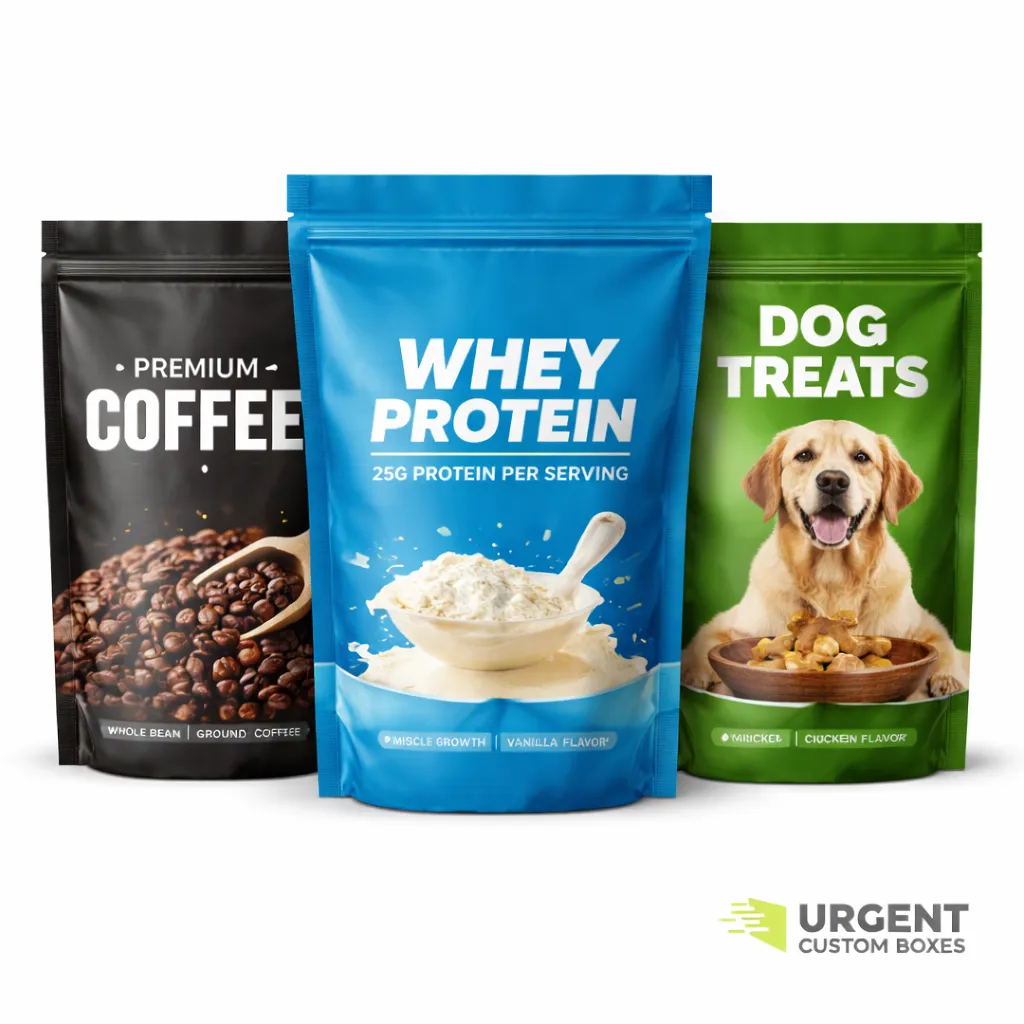
Large Mylar bags fit products sold in bigger units or stored for longer periods: bulk foods, grains, beans, rice, coffee, pet food, snacks, jerky, powders, supplements, and long-term storage kits. They also work as liners for boxes, pails, or drums.
Any product where you measure in pounds, kilos, or multiple liters rather than small portions is a strong candidate. Large bags let you consolidate smaller packs, reduce outer packaging, and move product more efficiently through warehouses, pallets, and customer storage spaces.
Common large-bag use cases
- Bulk rice, beans, grains, pasta, and dry staples
- Large-format coffee, snacks, and trail mixes
- Pet food, treats, and farm or feed products
- Protein powders, meal replacements, and blends
- Emergency food storage and preparedness kits
- Liners for boxes, pails, and big outer containers
How do large Mylar bags protect bulk products and long-term storage?
Large Mylar bags protect bulk products and long-term storage by using multilayer barrier films, generous seal areas, and optional thicker structures. They help keep out oxygen, moisture, light, and odors so contents stay stable, safe, and usable across long shelf lives and rougher handling.
Because volume and weight are higher, design focuses on barrier plus strength. We specify film, thickness, and seal geometry to resist punctures, seam failures, and pinholes under stacking, palletization, transport, and long-standing storage, whether in warehouses, containers, or customer environments.
Protection features
- High oxygen and moisture barrier for extended storage
- Opaque or metallic film options for light-sensitive products
- Seal zones sized for real-world stacking and dropping
- Optional extra thickness for puncture and tear resistance
- Compatibility with oxygen absorbers or desiccants where needed
What sizes and formats are available for large Mylar bags?
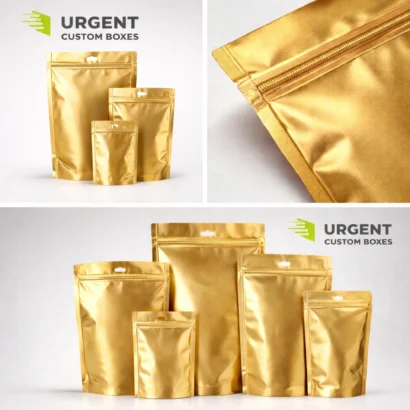
Large Mylar bags are available as big flat pouches, stand-up pouches, and gusseted bags, scaled for multiple pounds or liters. You choose width, height, and gusset depth so internal volume matches your real product weight, density, storage, and handling requirements.
Formats can range from “larger than retail” to truly bulk: several pounds of product in a stand-up pouch, or deep side-gusseted bags built to line cartons or pails. We size bags around your actual fills, not just a generic “large” label or guess.
Typical large formats
- Oversized stand-up pouches for big consumer units
- Side-gusseted bags for wholesale and foodservice
- Deep flat bags for inner liners and bricks
- Heavy-duty structures for stacking in boxes or bins
- Custom dimensions matched to pallets and warehouse racking
How much do large Mylar bags cost and what affects pricing?
Large Mylar bag cost depends on size, film structure, thickness, finishes, closure type, and order volume. Because they use more material and often higher specs, unit prices are higher than small pouches, but they can reduce overall packaging cost per kilo or pound.
We usually show cost per bag and cost per packed weight, so you see real economics. You can compare scenarios: lighter vs heavier films, plain vs printed, zipper vs no zipper, and decide where durability and branding justify extra spend for your bulk or long-term lines.
Cost drivers
- Bag dimensions and laminate specification
- Standard vs high-barrier or extra-thick films
- Plain vs fully custom-printed artwork
- Zippers, valves, or special closures (if used)
- Order quantity and how many SKUs share the same spec
How do you choose the right thickness and structure for large Mylar bags?
You choose thickness and structure for large Mylar bags by looking at product weight, sharpness, storage duration, and handling conditions. Heavier and longer-term applications usually benefit from thicker films, larger seal areas, and gussets built to support vertical and horizontal load.
We consider how bags are filled, stacked, palletized, shipped, and stored. That includes whether they sit on shelves, in bins, inside boxes or pails, or in long-term storage setups. Structure is built as much around logistics reality as around product and branding needs.
Selection factors
- Product density and potential sharp edges
- Desired shelf life and storage temperature/humidity
- Use as standalone bag vs inner liner
- Manual vs automated filling and sealing
- Stacking patterns, pallet height, and transport routes
How do you order custom large Mylar bags?
Step 1 – Define product and storage plan
- Product type and net weight/volume per bag
- Shelf life and storage conditions (short-term vs long-term)
- Handling: warehouse, pallets, containers, retail, or direct
- Any regulatory, labeling, or certification requirements
Step 2 – Choose structure and (if needed) artwork
- Select size, format (flat, gusseted, stand-up), and thickness
- Decide on plain vs printed, zipper vs no zipper
- Receive dieline templates for printed large bags
- Place branding, product info, and usage/storage instructions
- Approve digital proofs and structural specs
Step 3 – Produce, test and restock
- We produce large Mylar bags to your specification
- You test with real product and typical handling
- Cartons arrive labeled by size/spec for easy deployment
- Reorders reuse proven specs; new products can share the same large format























Reviews
There are no reviews yet.