Description
What are biodegradable Mylar bags?
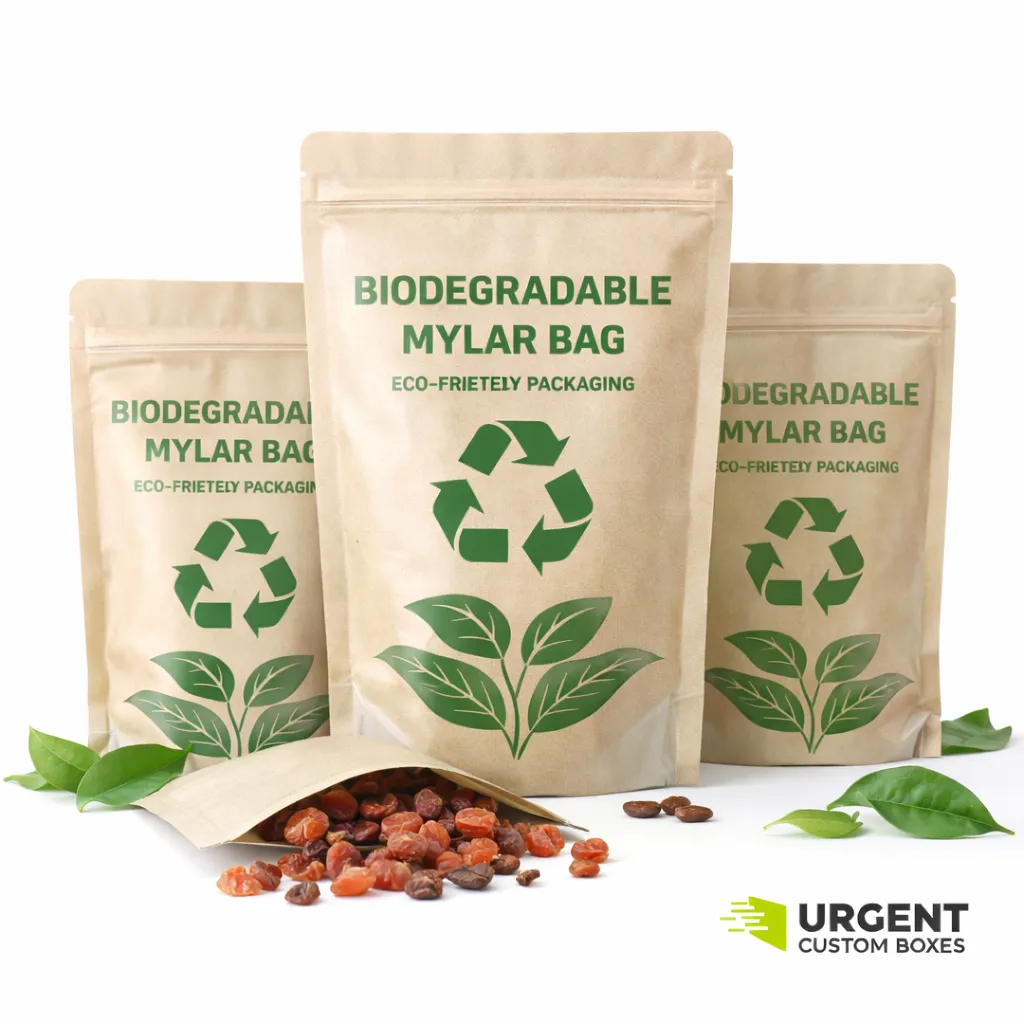
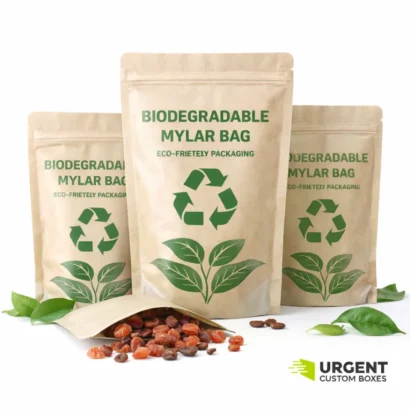
Biodegradable Mylar bags are high-barrier pouches made from compostable or bio-based films instead of conventional PET/foil laminates. They aim to provide similar protection and print quality to classic Mylar-style bags but are designed to break down more safely at end-of-life under defined conditions.
In practice, these are Mylar alternatives with barrier layers from renewable or compostable materials. You still control size, format, thickness, closure, finish and artwork, but the film specification shifts from fossil-based plastics toward more sustainable structures that support your brand’s environmental positioning.
Why choose biodegradable Mylar bags over traditional pouches?
You choose biodegradable Mylar bags when you want packaging that aligns with sustainability goals while still protecting product and looking professional. They help reduce reliance on conventional plastics, support eco messaging and can fit into composting or lower-impact disposal streams depending on material and local systems.
Instead of “green” claims glued onto standard bags, you build sustainability into the packaging itself. That can support consumer trust, brand storytelling, retailer requirements and internal ESG targets, while still giving you a flexible, light, printable format that ships efficiently and stores flat.
Benefits versus traditional
- Less dependence on fossil-based films
- Potentially compostable or biodegradable in suitable conditions
- Strong branding opportunity around lower-impact choices
- Compatible with many existing filling and sealing setups
- Works with modern, natural and conscious product ranges
Which products fit best in biodegradable Mylar bags?
Biodegradable Mylar bags fit dry, shelf-stable products that benefit from barrier and branding but don’t demand extreme shelf life: snacks, coffee, tea, granola, pet treats, supplements, powders, dry mixes and many cosmetic or personal-care refills or samples.
They are ideal for eco-focused brands and product lines where customers actively care about packaging impact. You can start with selected SKUs—like natural snacks or “green” sub-brands—and expand as you confirm performance, customer response and operational fit.
Common use cases
- Granola, nuts, seeds and snack mixes
- Coffee, tea and specialty dry beverages
- Pet treats and natural chew items
- Powdered supplements and functional blends
- Soaps, refills and dry personal-care formats
- Trial and sample packs for eco product lines
How do biodegradable Mylar bags protect products compared with regular Mylar?
Biodegradable Mylar bags protect products using engineered barrier films that control oxygen, moisture and light, similar to regular pouches. They often deliver slightly different barrier profiles, so we match film choices to your specific product, shelf life goals and storage conditions.
Protection still matters more than claims. We start with what your product needs to stay safe, fresh and stable, then select biodegradable or compostable structures that realistically support those needs. For many dry goods and moderate shelf lives, modern bio-based laminates perform well.
Protection considerations
- Oxygen and moisture barrier level vs required shelf life
- Light protection for sensitive ingredients or aromas
- Seal strength and durability in handling and shipping
- Compatibility with your sealer temps and dwell times
- Storage environment: temperature and humidity range
What customization options can you add to biodegradable Mylar bags?
You can customize biodegradable Mylar bags across size, format, thickness, zipper, hang hole, window style, finish and full-color printing. This lets you keep your eco story consistent with your brand visuals instead of compromising aesthetics just to change materials.
We treat the bag as an entity with attributes: bio-based film spec, dimensions, closure, finish, opacity, artwork and eco messaging. You decide if the look feels minimal and natural, or bold and colorful with strong sustainability icons and claims.
Structural options
- Flat, stand-up or gusseted pouch formats
- Standard or resealable zippers (where compatible)
- Tear notches and optional hang holes
- Strip windows or no windows depending on barrier needs
- Thickness tuned to product weight and protection level
Visual and branding options
- Matte, natural-feel laminates or selected gloss options
- Earthy palettes or bright, modern eco aesthetics
- Clear areas for certifications and eco badges
- Story panels explaining material and disposal guidance
- Space for ingredients, nutrition, usage and QR codes
What about compostability, recyclability and disposal?
Biodegradable Mylar bags can be compostable, industrially compostable or simply lower-impact bio-based, depending on the exact film spec. Real-world disposal depends on local facilities; you should only claim compostability or recyclability that your chosen material and region can genuinely support.
We align wording with the material’s certifications and limitations. That might mean “industrially compostable where facilities exist” or “made from bio-based films” rather than generic “eco” language. Clear, honest on-pack guidance helps customers make better decisions and protects your brand from greenwashing risks.
End-of-life guidance may include
- Certification marks (e.g., industrial compostability)
- Disposal notes tied to local infrastructures
- Advice to keep bags out of general paper or glass streams
- Emphasis on reducing contamination and wish-cycling
- Links or QR codes to your sustainability information
How much do biodegradable Mylar bags cost?
Biodegradable Mylar bags usually cost more than standard plastic-based pouches because of specialized films and lower global scale. Price still depends on bag size, film spec, finishes, zipper types, print complexity and order volume, with larger runs improving unit economics.
You’re investing in both performance and positioning. Clear cost comparisons help you decide which products warrant biodegradable packaging now, and where standard or recyclable structures still make more sense given price and customer expectations.
Main cost drivers
- Bio-based or compostable film type and thickness
- Size and complexity of the pouch format
- Plain vs fully custom print and finishes
- Zipper and window options that match the film
- Volume per SKU and how many SKUs share the same spec
How do you order custom biodegradable Mylar bags?
Step 1 – Define product and sustainability targets
- Product type and expected shelf life
- Storage and shipping conditions
- Desired certifications or eco claims
- Sales channels and customer expectations
Step 2 – Choose structure, film and artwork
- Select size, format, thickness and closure style
- Confirm which biodegradable or compostable films are suitable
- Receive dieline templates and eco-message guidelines
- Place branding, product copy and clear disposal instructions
- Approve digital proofs after preflight and claim checks
Step 3 – Produce, test and scale
- We produce biodegradable Mylar bags to spec
- You test with real product and logistics where needed
- Cartons arrive sorted by SKU for easy packing
- Reorders reuse proven specs; new eco SKUs plug into the same system

















Reviews
There are no reviews yet.